Hatha vs Vinyasa vs Ashtanga Yoga - Which Style Fits You Best? (2026 Complete Guide)
Discover the differences between Hatha, Vinyasa & Ashtanga yoga: pace, structure, benefits & who each style is ideal for. Choose the yoga path that suits your goal and level.
Yoga has evolved into many styles ... but three of the most popular and oft-compared are Hatha Yoga, Vinyasa Yoga, and Ashtanga Yoga. Each offers a distinct rhythm, intensity, and focus. Understanding their differences can help you choose a practice that fits your goals, body, and lifestyle.
In this guide, we’ll explore the origins, structure, pace, benefits, and ideal practitioners for each style ...so you can pick with clarity.
What Defines Each Style
Hatha Yoga
"Hatha" broadly refers to physical yoga practices that use postures (asanas), breath control (pranayama), and sometimes meditation. It is widely considered the most accessible entry point for new practitioners. Classes are usually slower, with poses held longer ... a great way to learn alignment, build flexibility, and reduce stress.
Because of its slower pace and focus on fundamentals, Hatha is often preferred by beginners, people with limitations or injuries, or anyone looking for a gentle, mindful practice.
Vinyasa Yoga
Vinyasa means “breath-to-movement.” In Vinyasa classes, practitioners flow from one pose to another, synchronizing each movement with an inhale or exhale. Poses, transitions, and the pace vary widely ... no fixed sequence. This dynamic, flowing style gives Vinyasa what many call a “moving meditation.”
Vinyasa sits between Hatha and Ashtanga in intensity and structure: more energetic than Hatha, but more flexible than Ashtanga. It appeals to those who enjoy creativity, variety and a balanced blend of strength, flexibility, and breath awareness.
Ashtanga Yoga
Ashtanga is a traditional, highly structured system of yoga... often described as a rigorous “moving meditation.” In Ashtanga, you follow a set sequence of postures (series) in the same order each time. Movement is synchronized with breath (Vinyasa count), and the practice often includes Ujjayi breathing, bandhas (internal energy locks), and a disciplined progression through levels.
Because of its consistent sequence, Ashtanga allows practitioners to track progress, deepen practice over time, and build strength, flexibility, endurance ... all while cultivating mental discipline.
Comparison: Pace, Structure & Intensity
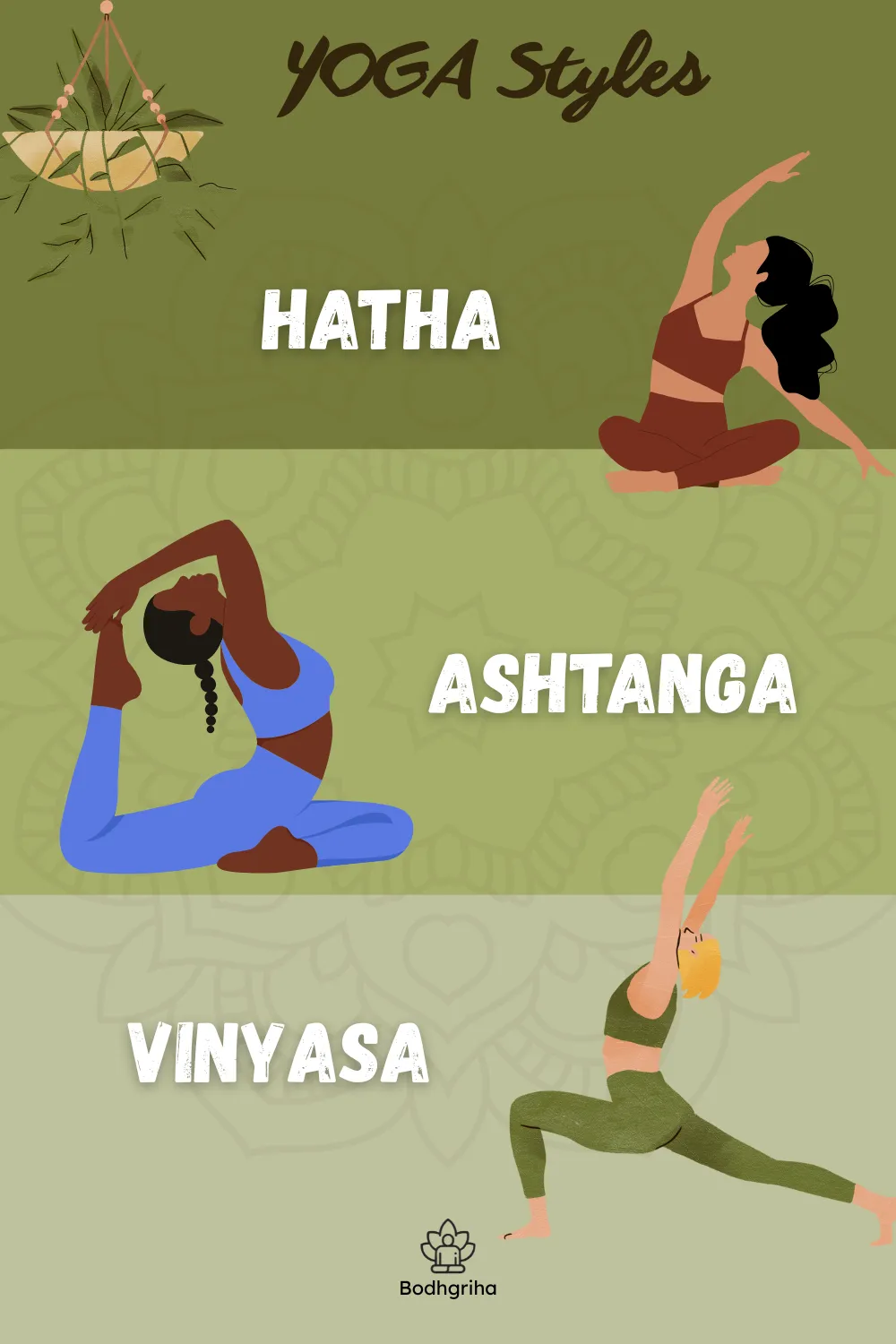
| Style | Pace & Intensity | Structure / Sequence | Ideal For / Benefits |
|---|---|---|---|
| Hatha | Slow, gentle, slower transitions | Flexible classes; instructors mix asanas and pranayama; poses held longer | Beginners, stress relief, flexibility, mindful alignment |
| Vinyasa | Moderate to energetic; flowing pace synchronized with breath | No fixed sequence ... each class varies by instructor; creative flows | Balanced workout ... flexibility + strength + cardio; variety lovers |
| Ashtanga | Vigorous, physically demanding, continuous movement with breath-synchronized flow | Rigid, fixed series (primary, intermediate, advanced) ... same every time | Discipline seekers, strength & stamina, consistent progress, committed practice |
What Each Style Offers - Benefits & Focus
Why Choose Hatha
- Great for beginners or those new to yoga.
- Builds flexibility, alignment, foundational strength.
- Offers opportunity to combine asanas, breathwork, and mindfulness in a gentle way.
- Perfect for stress reduction, slower-paced movement, recovery or therapeutic practice.
Why Choose Vinyasa
- Combines cardio, strength, flexibility, breath awareness - a full-body workout.
- Because every class is different, it keeps practice fresh and engaging, reducing routine fatigue.
- Offers a balance between fitness and mindfulness, good for modern lifestyles when you want dynamic yet mindful movement.
Why Choose Ashtanga
- Structured path ... great for those who prefer routine, discipline, measurable progress.
- Builds endurance, strength, flexibility, mental resilience over time.
- Excellent for practitioners who want a committed, long-term yoga journey with depth and consistency.
Who Should Practice What?- Based on Goals & Lifestyle
- Absolute Beginners / Low Fitness / Gentle Needs: Start with Hatha ... slow, mindful, foundational.
- Seeking Balanced Fitness + Flexibility + Creativity: Consider Vinyasa ... dynamic, varied, full-body benefit without rigidity.
- Want Discipline, Depth, Strength & Progress: Opt for Ashtanga... committed, structured, yoga as a lifestyle rather than a class.
- Looking for Stress Relief, Recovery or Therapeutic Movement: Hatha or gentle Vinyasa styles work best.
- Prefer Routine, Traditional Sequence & Long-Term Growth: Ashtanga offers a clear path with time-tested structure.
Key Differences Summarized
- Sequence: Ashtanga follows a fixed series each time; Vinyasa is creative and varies; Hatha is flexible and often slower.
- Pace: Hatha is slow; Vinyasa medium/varied; Ashtanga fast, dynamic and often intense.
- Breath & Flow: All styles emphasize breath, but Vinyasa & Ashtanga link every movement with breath (flow). Hatha may emphasise breath, but often with longer holds and slower transitions.
- Accessibility: Hatha ... easiest to start; Vinyasa ... moderately accessible; Ashtanga ...requires discipline and physical readiness.
- Experience & Commitment: Ashtanga demands regular practice and commitment. Vinyasa can be adapted to many levels. Hatha suits casual or beginner yoga journeys.
Can You Combine Styles? (Yes!)
Yoga isn’t rigid ... many practitioners merge elements to suit their changing needs. For example:
- Use Hatha in mornings for gentle stretch & clarity.
- Practice Vinyasa mid-week for energy, cardio and creativity.
- Reserve Ashtanga sessions for weekends or when you want deeper challenge and focus.
This hybrid approach can balance strength, flexibility, mindfulness, and consistency ...giving the best of all worlds without overcommitting to one style.
Final Thoughts
There’s no “best” style ... only what’s best for you right now. Whether you seek calming alignment, dynamic flow, vigorous challenge or mindful discipline, Hatha, Vinyasa and Ashtanga each offer unique paths.
Start where you are. Try different classes. Honour your body, respect your breath, and let your yoga evolve with your needs.
May your mat be a place of discovery, balance, strength ... and peace.
Share this article