Standing Yoga Flow: 13-Pose Sequence to Strengthen, Stretch & Energize
Try this 13-pose standing yoga flow... from Mountain Pose to Forward Fold ... to improve posture, balance, flexibility and energy. No mat required, just your body and breath.
The 13-Pose Sequence (with Benefits & Key Cues)
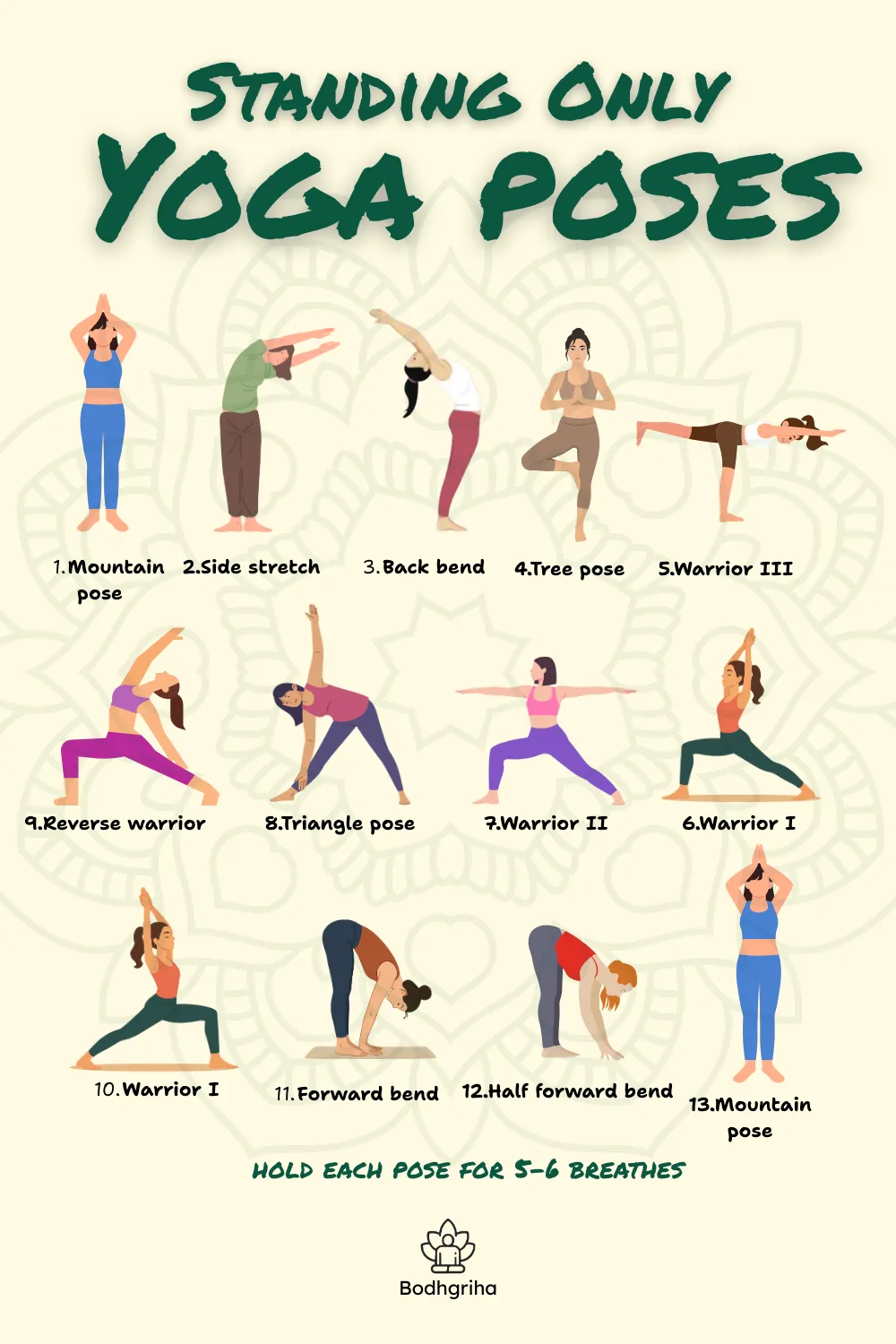
1. Mountain Pose (Tadasana)
Begin by standing tall, feet together or hip-width apart, arms relaxed by your sides. Root down through all four corners of your feet, engage your legs, lengthen your spine, and reach up through the crown of your head.
Benefits: Builds posture awareness ... this is the foundation of all standing poses. Strengthens thighs, glutes, ankles, and improves posture and alignment.
2. Side Stretch / Standing Side Bend
From Mountain Pose, inhale as you sweep both arms overhead, and on exhale, lean gently to one side ... stretching the side body (rib cage, obliques, intercostals). Inhale back to center, repeat on the other side.
Benefits: Lengthens the sides of the torso, improves spinal mobility, opens the intercostal muscles, and helps deepen breath ... great for relieving tension in the waist and side-body.
3. Back Bend (Standing Back-Arch)
From upright stance, inhale and lift the chest, slightly arch the spine backward, allow arms to float overhead or rest behind the hips ... careful not to compress the lower back.
Benefits: Gently opens the front of the body (chest, abdomen), counteracts rounding posture, stimulates spinal extension, and improves spinal mobility and heart-opening.
4. Tree Pose (Vrksasana)
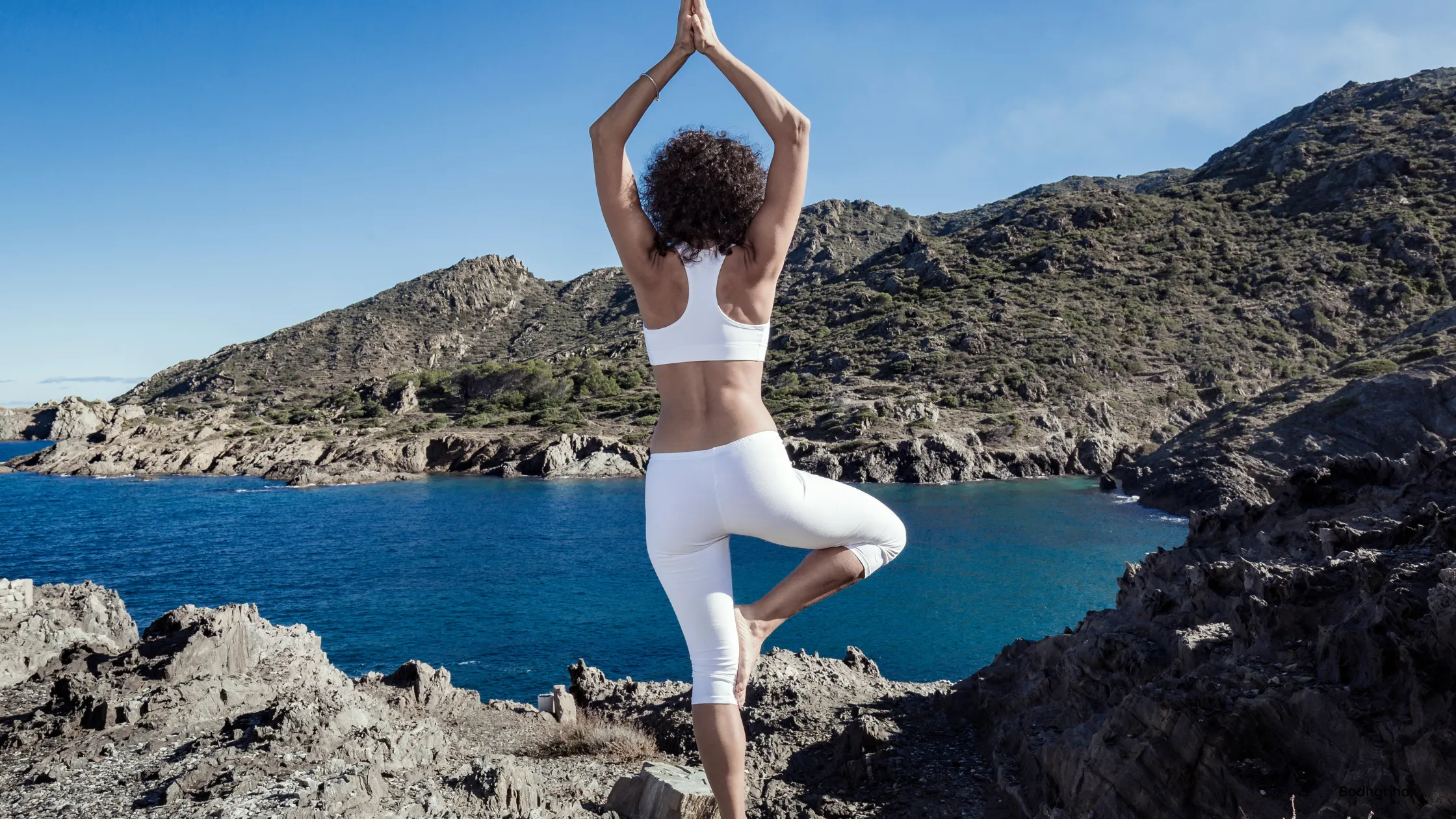
From Mountain, shift weight to one foot, lift the opposite foot to press against inner thigh or calf (never on knee), bring hands to prayer at chest (or overhead), and find balance.
Benefits: Improves balance, proprioception, leg strength, and grounding. Helps build focus, inner stability and hip-standing leg awareness. Excellent for posture and coordination.
5. Warrior III (Virabhadrasana III)
From standing, hinge forward at the hips while lifting one leg behind you straight; arms reach forward (or side) ... body remains parallel to the floor. Balance on one leg and stabilize core.
Benefits: A full-body strengthening and balance pose. Engages core, hamstrings, glutes, back, shoulders and improves hip stability. Excellent for building coordination, balance, and muscular endurance.
Key Tip: Focus on rooting the standing foot firmly into the ground, engage the core, and keep a long spine. If balancing is hard ... slightly bend the standing knee or use a wall for support.
6. Warrior I (Virabhadrasana I)
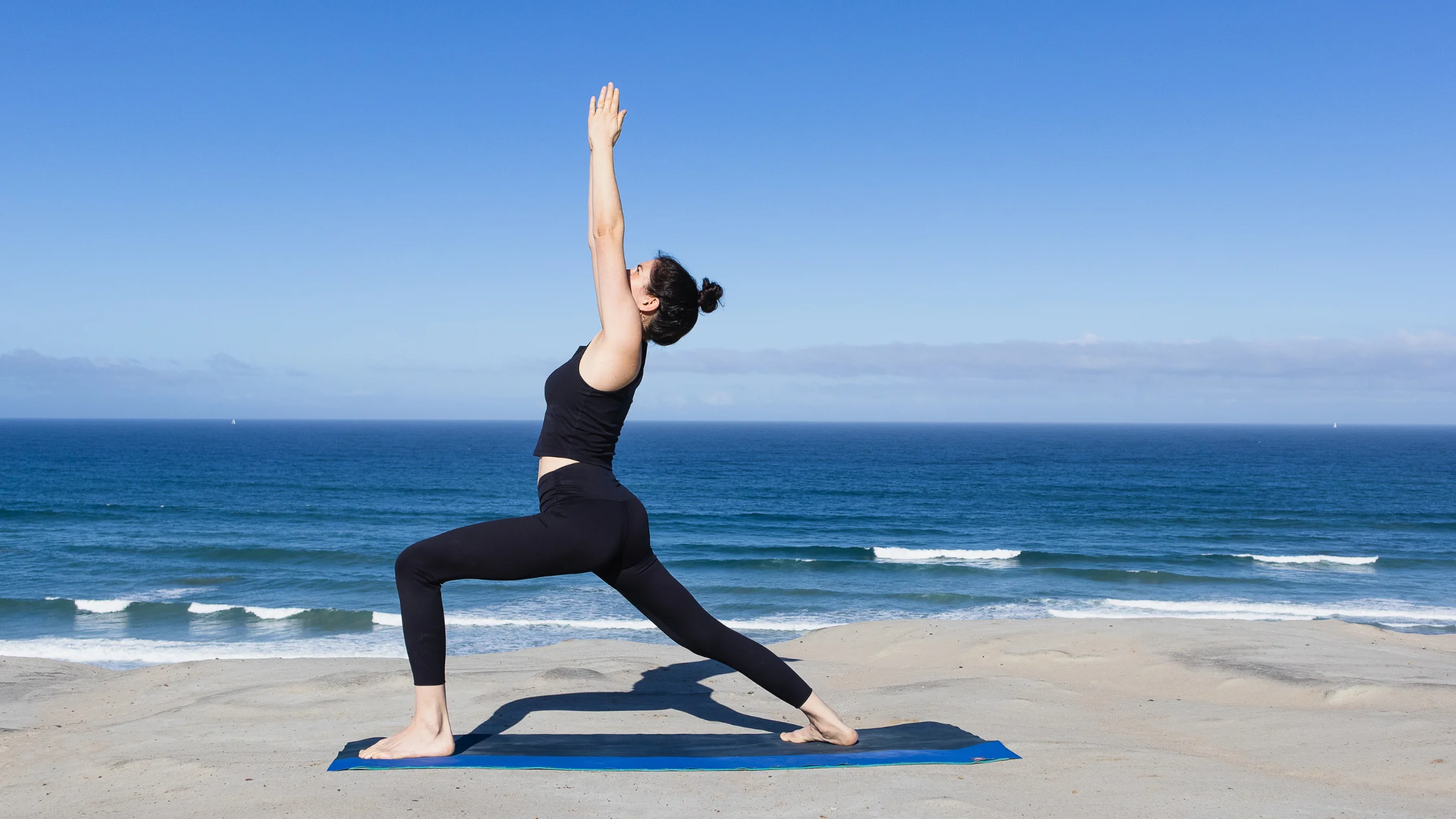
From Mountain, step one foot back ~3–4 ft, turn back foot out at ~45°, bend front knee (knee over ankle), square the hips forward, and lift arms overhead.
Benefits: Strengthens legs, ankles, glutes; opens hips and hip flexors; stretches the front of the body; improves grounding and stability. Great for building lower-body strength and hip mobility.
7. Warrior II (Virabhadrasana II)
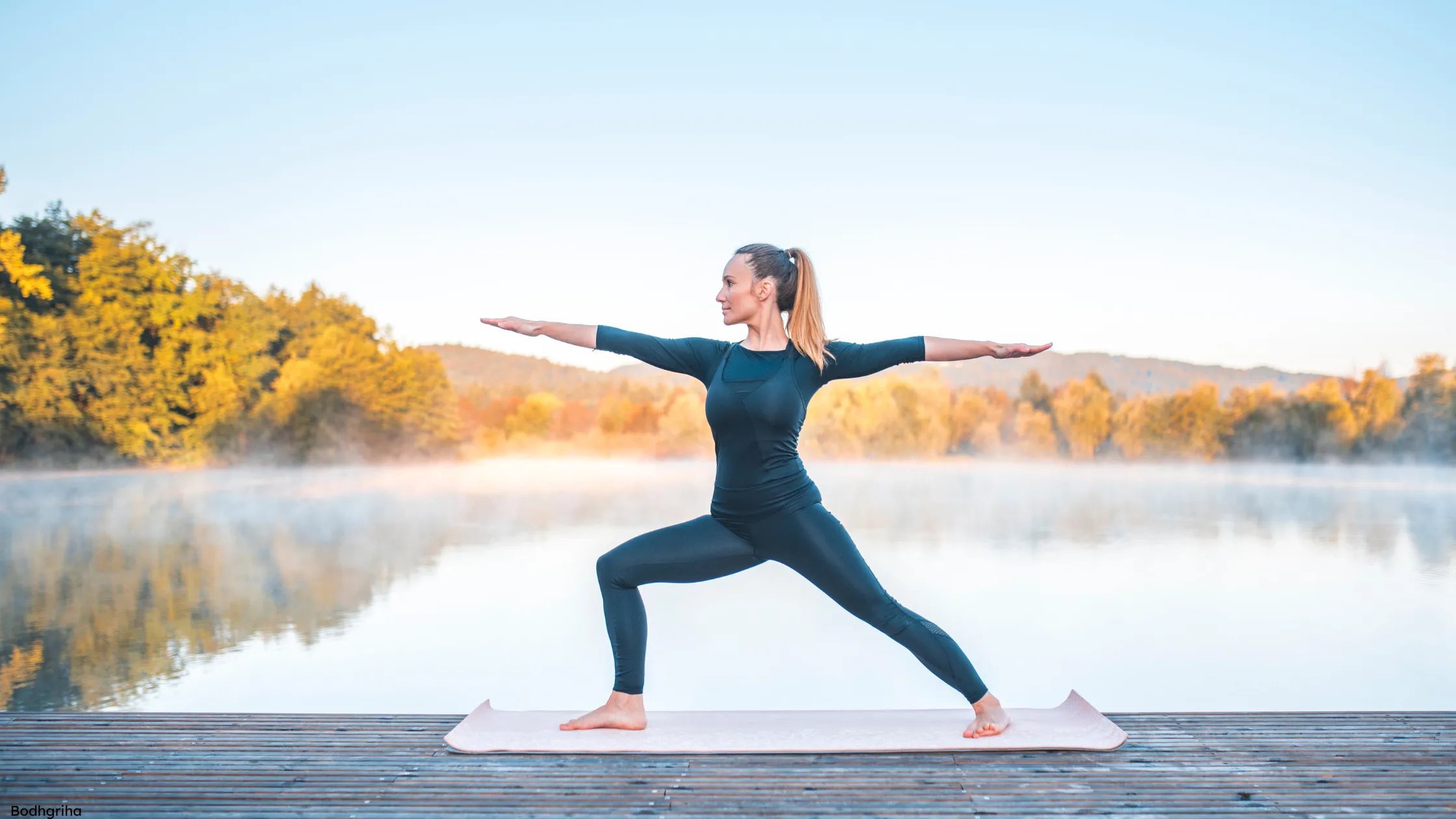
From Warrior I or Mountain, adjust feet so front foot points forward, back foot slightly inward, heel aligned. Bend front knee and extend arms out parallel to ground, gazing over front hand.
Benefits: Opens and strengthens hips, groins, inner thighs, and legs; expands chest and shoulders; builds stamina, focus, and lower-body stability. A classic foundational pose for yoga practice.
8. Triangle Pose (Trikonasana)
From Warrior II stance, straighten front leg, extend front arm forward then lower it to shin/ankle/floor (or block), reach other arm up toward sky, lengthening both sides of torso, and gaze upward or straight ahead.
Benefits: Stretches hamstrings, hips, groins, side-body, and spine; opens chest and improves lung capacity; enhances stability and alignment while promoting flexibility. Great for spinal mobility and side-body stretch.
9. Reverse Warrior (Viparita Virabhadrasana)
From Triangle or Warrior II stance, bend the front knee slightly, reach the front arm overhead/back while sliding the back hand down the back leg ... creating a lateral side stretch.
Benefits: Opens side body, groins and hips; stretches ribs, intercostals, legs; creates space in spine; promotes flexibility and fluidity in hips, waist and spine ... useful for counteracting tightness from sitting or desk work.
10. Warrior I Again / Alternate Side
Repeat Warrior I on the opposite side (or if you prefer, alternate between sides), so both sides of the body get symmetrical work.
Why It’s Useful: Helps evenly build strength and flexibility in both legs and hips, balances the body, and prevents imbalances from favoring one side.
11. Forward Bend (Standing Forward Fold)
From standing, hinge at the hips and fold forward ... let the head hang, relax the neck, allow spine to lengthen, and hands may rest near feet or floor (knees can bend slightly if needed to protect lower back and hamstrings).
Benefits: Stretches hamstrings, calves, spine; relieves tension in back and neck; calms the nervous system; releases lower-back tightness. Excellent for cooling down, stretching after standing work, and improving flexibility.
12. Half Forward Bend or Gentle Forward Fold Variation
From full fold, you can bend knees more and lift halfway (hands on shins/thighs) ... giving a gentler stretch and less strain if hamstrings are tight. Use this variation to safely transition or as a milder stretch.
Benefits: Provides a gentler hamstring/spine stretch; safer for beginners or those with tight legs; allows integration of breath, relaxation, and body awareness without deep fold demands.
13. Return to Mountain Pose (Tadasana) / Grounding & Integration
Finish the sequence by rising slowly from forward fold back into Mountain Pose. Feel your body alignment, root, and stand tall. Take a few deep breaths, observe how your body feels ... grounded, taller, lengthened.
Why This Matters: It helps “reset” posture, integrate the benefits of the preceding poses, and brings awareness back to neutral standing alignment. It’s a grounding closure that helps stabilize the nervous system and posture.
Why This Order Works- A Flow Built from Ground Up
 - The sequence begins with grounding & alignment (Mountain), establishing a stable base.
- Moves into side-body and spinal flexibility (side stretch, back bend) to awake the spine and warm up through the torso.
- Introduces balance & stability (Tree, Warrior III) - awakening the legs, core and proprioception.
- Builds strength, flexibility and opening of hips, legs, hips and spine through the Warrior → Triangle → Reverse Warrior block.
- Transitions into deep stretch and release with Forward Folds- allowing hamstrings, spine, and nervous system to soften.
- Concludes with grounding & integration - returning to Mountain Pose aligns the spine and centers awareness.
This flow supports a holistic full-body activation: strength + balance + flexibility + calmness.
Why Use This Flow - Who It’s For & When to Practice
This standing flow is well-suited for:
- Beginners - No need for props... great for starting yoga or hurried mornings.
- Desk-workers or sedentary people - Helps counteract hours of sitting: mobilizes hips, back, shoulders, and legs.
- Quick energy / posture reset - Use midday or anytime you feel stiff, tired or mentally foggy.
- Balanced home practice - A short, efficient routine that touches most major muscle groups and mobilizes spine.
Because it works the whole body and supports posture, balance, flexibility, and grounding, it’s a great “daily reset” or “wake-up/morning activation” routine.
Tips & Cautions for Safe Practice
- Focus on proper alignment especially in balancing poses (Tree, Warrior III) - root down, engage core, avoid locking knees.
- If you have tight hamstrings, bend knees in Forward Fold or use Half Fold variation.
- Move slowly between poses - avoid jerky or rushed transitions. Let breath guide movement.
- For balance poses, use a wall or chair for support if you feel unstable.
- Always listen to your body - skip or modify any pose that causes discomfort or pain.
Final Thoughts
Standing yoga isn’t just “easier yoga” .. done with intention, it can transform posture, strength, balance, flexibility, and mindfulness. This 13-pose sequence offers a full-body flow that can be practiced almost anywhere ... no mat, no props, just you and the breath.
Try it daily or a few times a week. Begin gently, stay present, and notice subtle changes: grounded feet, clearer posture, more stable balance, freer spine. Over time, this flow can become a pillar of your well-being ... supporting physical health, mental clarity, and inner calm.
Let your body stand tall, rooted, balanced and ready for whatever the day brings.
Share this article