
Benefits of Digital Detox: How Unplugging Boosts Mental Health, Sleep & Focus
Explore the powerful benefits of a digital detox - from reduced anxiety and better sleep, to sharper focus, deeper relationships and brain clarity. Discover how to unplug, reset, and thrive.
In our hyper-connected world, screens, apps, notifications and social media have become nearly unavoidable... yet mounting evidence suggests they come at a real cost to mental health, sleep, focus and emotional wellbeing. A digital detox ... a conscious break from screens and digital stimulation...is emerging as a powerful antidote. This blog explores the science-backed benefits of unplugging, what actually improves when you detox, and how you can begin a detox that supports your brain, body, and heart.
What Is a Digital Detox?
A digital detox means intentionally reducing or abstaining from digital device usage - smartphones, social media, internet, streaming, multitasking. It can range from short breaks (even just hours) to longer periods (days, weeks). The goal isn’t to demonize tech, but to reset habits, reduce overstimulation, and reclaim control of attention, sleep, relationships, and inner calm.
Many people report feeling less anxious, more present, more rested and science is beginning to back up those experiences.
Key Benefits of Unplugging: What Research Shows
1. Better Mental Health- Lower Depression, Anxiety & Stress
- A 2025 study found that limiting smartphone screen time to ≤ 2 hours/day for three weeks significantly reduced depressive symptoms, lowered stress, improved sleep quality and boosted overall well-being.
- A separate one-week social-media detox among young adults resulted in a 16.1% drop in anxiety, 24.8% reduction in depression, and 14.5% decline in insomnia symptoms.
- A broader review of digital-detox interventions suggests accessible benefits such as lowered depressive symptoms and reduced problematic internet use.
In short ... unplugging can help stabilize mood, ease emotional burden, and provide a break from the overstimulation and comparison culture that often fuels anxiety and depression.
2. Improved Sleep & Circadian Rhythm Regulation
Blue light from screens, late-night scrolling, and constant digital stimulation interfere with melatonin production and disrupt healthy sleep cycles.
Many people find that switching off screens at least an hour before bed or doing a digital detox ... leads to deeper, more restorative sleep, easier falling asleep, and fewer awakenings. Better sleep cycles then support mood, cognitive function, and overall energy.
3. Enhanced Focus, Clarity & Cognitive Rest
Frequent digital multitasking, notifications, and rapid context-switching fragment attention and overstimulate the brain. By reducing digital load, people often report sharper focus, improved memory, better concentration on tasks, and enhanced creativity.
One controlled intervention even found that blocking mobile-internet access for two weeks improved attention and performance on cognitive tasks... comparable to reversing age-related decline in attentional capacity.
4. Better Real-Life Relationships & Presence
Without constant notifications and digital distractions, many people rediscover presence in conversations, deeper connections, and more meaningful interactions. A break from screens often means more time and energy for face-to-face relationships, hobbies, nature, and self-reflection.
This shift can help re-balance life priorities ... from scrolling to sensing, from virtual comparison to real empathy.
Physical & Emotional Relief...Less Burnout, More Rest
Continuous screen usage doesn’t just tax the mind - it often affects posture (e.g., “tech neck”), eye strain, chronic stress responses, sleep disruption, and a sense of perpetual alertness or anxiety.
Digital detox can activate the body’s natural “rest and digest” mode, lower cortisol, relax the nervous system, and restore a sense of balance.
What Happens When You Detox- Realistic Timeframes & Effects
| Duration of Detox | Common Observations / Improvements |
|---|---|
| 24–48 hours | Relief from eye strain, first signs of mental calm, reduced urge for constant checking |
| 3–7 days | More restful sleep, mood stabilization, first shifts in anxiety/depression symptoms (per small-sample studies) |
| 2–3 weeks | Noticeable improvements in stress, focus, emotional balance, sleep quality and overall wellbeing (in research with screen-time reduction) |
| Longer / recurring detox periods | Sustained mental clarity, better habits around tech use, more fulfilling real-life connections, healthier lifestyle integration of digital and analog life (though sustainable commitment matters) |
Important caveat: benefits tend to drop if old habits resume. Detox works best when followed by conscious, sustainable digital-use habits.
How to Do a Digital Detox (Without Going Cold Turkey - Unless You Want To)
You don’t need a 30-day retreat to reap benefits. Here are practical, flexible approaches:
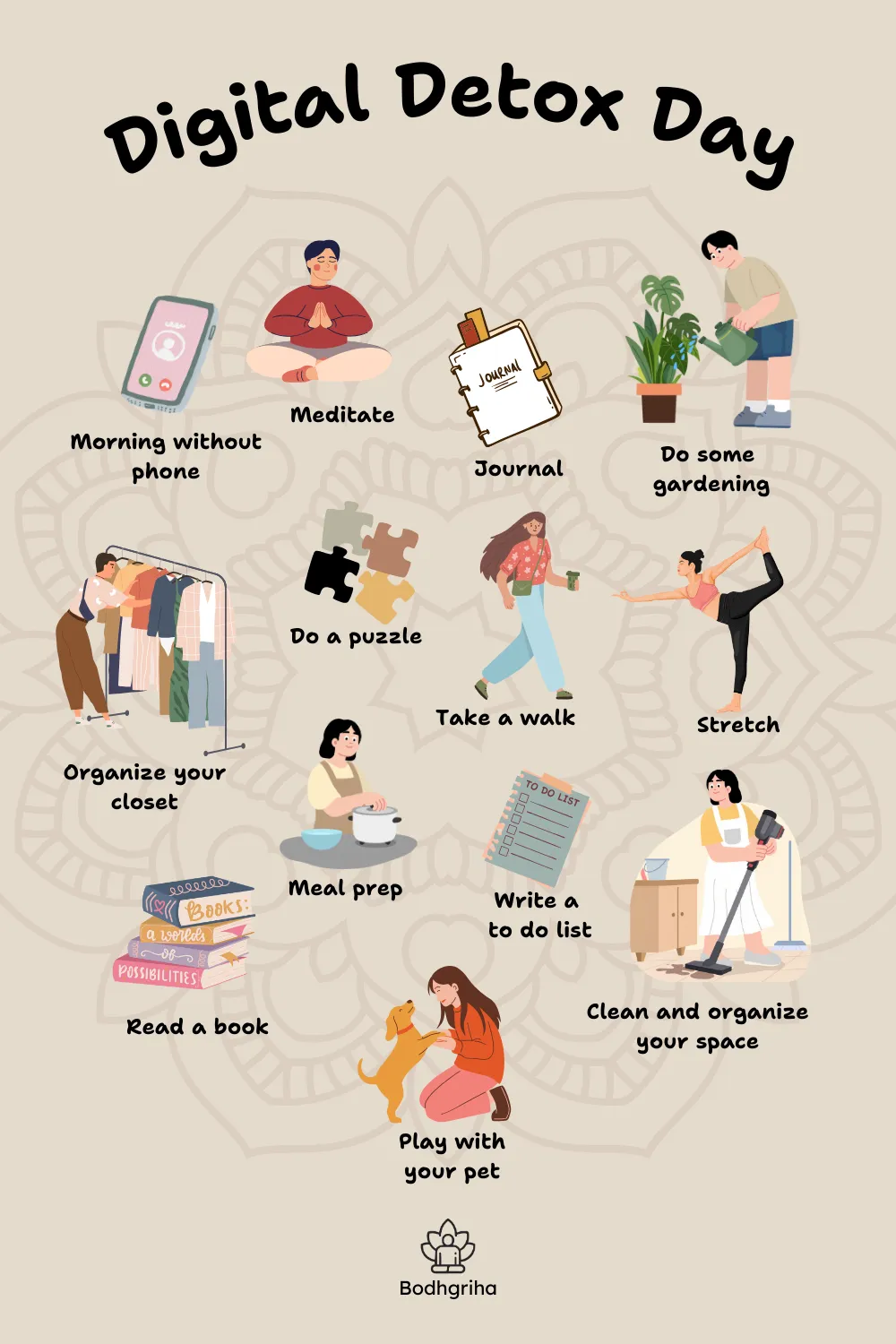
- Set tech-free time blocks- e.g., no screens 1 hour before bed; device-free meals; morning without phone.
- Use app blockers or “do not disturb” settings- around focus/work time or rest hours.
- Replace screen time with grounding activities- walking in nature, reading physical books, journaling, yoga/meditation, prep your next meal, clean your space, connecting with loved ones in person, play with your pet, paint, do a fun puzzle, organize yourspace and clean your closet or do some gardening.
- Designate “digital-light” zones- only use tech for essential work/communication; avoid doomscrolling, news bursts, social-media loops.
- Limit social media rather than all digital use - some studies show social media detox alone (even 7 days) reduces anxiety, depression, insomnia.
- Monitor and reflect- track screen time vs mood, sleep, attention; see how small tweaks map to real-life improvements, make a gratitute list.
Remember... detox isn’t about rejection but recalibrated, conscious use of digital tools.
Things to Know: Detox Isn’t a Magic Cure-All
- Effects differ by individual: people with heavy baseline digital overload often see more dramatic change.
- Social or work demands may limit possibility of full detox ... that’s okay. Even partial detox or screen-time reduction helps.
- Detox can trigger withdrawal-style discomfort at first ... boredom, FOMO, loneliness. That discomfort often fades after the first few days.
- Detox shouldn’t replace professional care for mental illness... but can be a complementary lifestyle support.
In Defense of Silence & Presence
Our brains - wired for novelty, alertness, connection, are being stretched thin by endless digital stimuli. Screens aren’t evil, but constant stimulation without breaks can erode mental health, impair sleep, fragment focus, and leave us disconnected from what matters: ourselves, others, the world around us.
A digital detox offers a way back: a chance to reclaim time, attention, calm, clarity - to reset not just our devices, but our minds.
Whether you go full-on unplugged for a weekend or gently reduce your screen time every evening, you may discover a simple truth: sometimes less connection ... digital or otherwise ... means more presence, more peace, and a better-rooted life.
Share this article