The 8 Limbs of Yoga (Patanjali’s Ashtanga Yoga): A Complete Guide to Mind-Body-Spirit Integration
Explore Patanjali’s 8 limbs of yoga: Yama, Niyama, Asana, Pranayama, Pratyahara, Dharana, Dhyana, Samadhi. Learn how each guides body, breath, mind and spirit toward inner peace and self-realization.
Yoga is often reduced to physical postures. But according to the ancient text Yoga Sutras of Patanjali ... written or compiled by Patanjali ... true yoga is a holistic eight-limbed path that guides a practitioner from ethical living to deep spiritual awareness.
This guide explores all eight limbs ... what they are, how they build on each other, and how you can incorporate them into a modern lifestyle.
What Is Ashtanga (Eight-Limb) Yoga?
The term Ashtanga comes from Sanskrit: ashta = eight; anga = limb. The “eight limbs of yoga” are a structured path toward inner peace, clarity, and self-realization.
Rather than being just a physical exercise, this system offers a blueprint for living ... guiding our ethics, discipline, posture, breath, senses, focus, meditation, and ultimately consciousness itself.
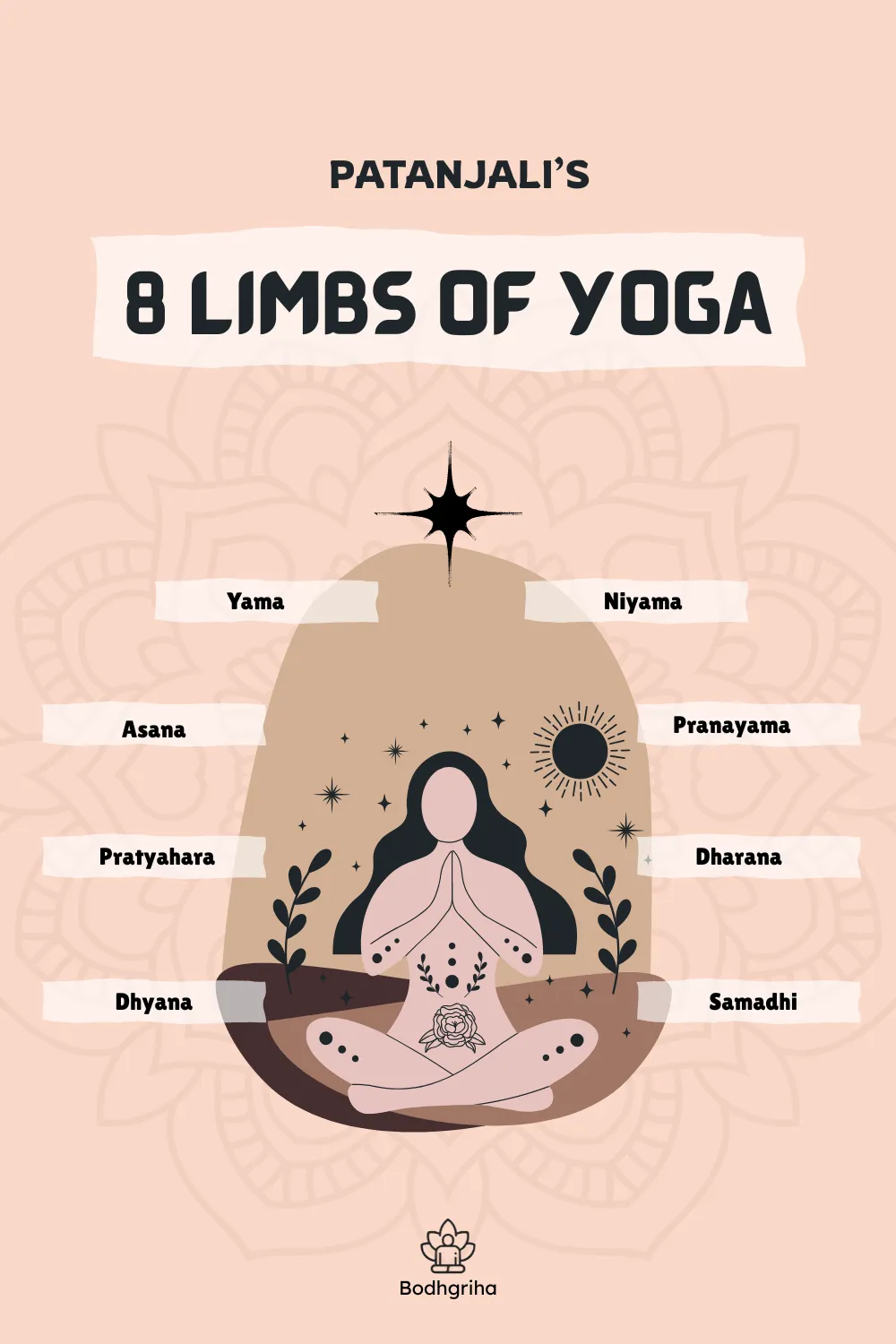
The 8 Limbs - From Outer Conduct to Inner Union
Each limb represents a step, working outward in the beginning, then turning inward toward deeper awareness and union.
1. Yama - Ethical Restraints & Social Conduct
Yamas are moral guidelines that govern how we relate to others and the world. They encourage compassion, honesty, respect and balance. The five classic Yamas are:
- Ahimsa – non-violence / non-harming
- Satya – truthfulness / honesty
- Asteya – non-stealing / integrity
- Brahmacharya – moderation / responsible energy use
- Aparigraha – non-greed / non-hoarding
Living by the Yamas helps us create external harmony ... a foundation for inner growth.
2. Niyama - Inner Disciplines & Self-Care
Niyamas are personal observances that shape our inner world. The classical five:
- Saucha – purity / cleanliness (body & mind)
- Santosha – contentment / acceptance
- Tapas – discipline / perseverance
- Svadhyaya – self-study / spiritual study
- Ishvara Pranidhana – surrender to a higher purpose or universal consciousness
Together, Yama + Niyama form the ethical and spiritual foundation ... the “root system” of a yogic life.
3. Asana - Postures & Physical Stability
In modern yoga, “asana” means asanas or yoga poses. In Patanjali’s context, Asana meant a steady and comfortable seat ... the posture needed for steady meditation.
But in today’s practice, asana helps:
- Build strength, flexibility, and body awareness
- Prepare the body and mind for breathwork and meditation
- Release physical tension and align energy flow
A well-practised asana practice supports both health and deeper spiritual tools.
4. Pranayama - Breath, Energy & Life Force Regulation
Pranayama involves conscious regulation of breath ... inhalation, exhalation and retention. The aim is to control prana (life force), calm the nervous system and deepen awareness.
When done with mindfulness:
- Breath can soothe anxiety, ground the mind and balance energy
- It becomes a bridge between the body and mind, preparing the practitioner for deeper inner work
5. Pratyahara - Withdrawal of the Senses
Pratyahara means turning inward. It’s the art of withdrawing from sensory overload ... tuning out external distractions and gently turning attention inward.
This doesn’t mean complete isolation. Instead, it's about cultivating awareness: noticing sensory impressions without reacting, letting them pass ... a kind of internal mindfulness. This creates space for true focus.
6. Dharana - Concentration of Mind
With senses withdrawn, you train the mind to focus on a single point ... a sound, breath, mantra, or image. This steady focus is called dharana (concentration).
It’s a critical bridge: from external discipline to inner stillness. Dharana strengthens mental clarity and self-control.
7. Dhyana - Meditation & Unbroken Awareness
When concentration becomes continuous, it becomes dhyana ...meditation. The mind remains steady on the chosen focus, free from distraction. It’s a state of calm, clarity, insight and inner presence.
Dhyana helps us transcend ordinary thinking and connect to deeper awareness.
8. Samādhi - Union, Liberation & Pure Consciousness
Samādhi is the culmination: a profound inner absorption or union with the ultimate Self. Mind, breath, body and senses dissolve. The practitioner tastes unity, peace, and freedom ... a state of clarity beyond ego and separation. It’s considered the ultimate goal of yoga.
How the Limbs Fit Together - From Discipline to Liberation
- The first four limbs (Yama, Niyama, Asana, Pranayama) set the foundation: ethical living, physical stability and breath control.
- The next two (Pratyahara, Dharana) withdraw attention from external distractions and internalize focus.
- The final two (Dhyana, Samādhi) open the path to meditation and union ... beyond body and mind.
According to research among yoga teachers, most emphasize asana and pranayama ... but those who sustain a balanced practice across all eight limbs report deeper inner growth, mental balance and clarity.
Why 8-Limb Yoga Matters - Especially Today
Many contemporary yoga practices focus heavily on the physical ... flexibility, strength, or aesthetics. While these have value, Ashtanga’s eight-limb system points to a much broader and deeper purpose:
- Holistic well-being: ethics, physical health, breathwork, mental clarity, emotional balance and spiritual growth ... all in unity.
- Mind-body integration: ethical living and self-discipline ground physical practice; breath and meditation calm the mind.
- Sustainable lifestyle: instead of quick fixes or fitness trends, Ashtanga offers a lifelong roadmap to lasting harmony.
- Inner freedom: beyond stress relief or flexibility... the goal is self-realization, inner peace and clarity, even amidst life’s chaos.
How You Can Begin Integrating the 8 Limbs Today
You don’t need to master all eight overnight. Even small steps can create meaningful change:
- Start with Yama & Niyama: Choose one ethical / self-care principle this week (e.g. truthfulness, contentment, or non-violence in speech).
- Bring mindfulness to Asana: Move with awareness rather than for achievement. Let poses open you ... not challenge you.
- Add gentle Pranayama: Try a few minutes of deep belly breathing in the morning or before bed.
- Practice Pratyahara: Create moments of quiet ... a few minutes away from screens, notifications, noise. Turn senses inward.
- Explore Dharana & Dhyana: Experiment with meditation or focused concentration ... even 5–10 minutes daily.
- Observe results: Notice shifts in mood, clarity, relationships and overall calm. Over time, you may gravitate naturally toward deeper limbs.
Remember: yoga isn’t a performance ... it’s a path of steady evolution.
A Word on Tradition, Modern Yoga & Respectful Practice
- The eight-limb path is ancient. It’s wise to approach it with reverence and context ...not as a checklist or marketing tool.
- As attested by surveys, many modern practitioners focus primarily on asanas or breathwork. But the full benefits unfold when all limbs are acknowledged and practiced with respect.
- Yoga is personal ... everyone’s journey is unique. Honour where you are; move thoughtfully, without forcing or chasing “spiritual achievement.”
Final Thoughts
The 8 Limbs of Yoga teach us that true yoga is more than shapes on a mat. It’s a way of living ... ethically, mindfully, consciously ... that brings harmony to the body, clarity to the mind, and depth to the spirit.
Whether you’re moving through asanas, observing your breath, drawing your senses inward, or simply choosing kindness ... each limb supports the next.
Take one small step today. Over time, the journey becomes the destination. As Patanjali hints, the path itself is yoga and the ultimate reward is freedom within.
Share this article