Sun Salutation A, B & C: A Complete Guide to Surya Namaskar Variations
Discover Sun Salutation A, B, and C (Surya Namaskar variations) in this complete guide. We provide beginner-friendly, step-by-step breakdowns of each sequence, explain their purpose and benefits, and share tips on how and when to practice each in your yoga routine.
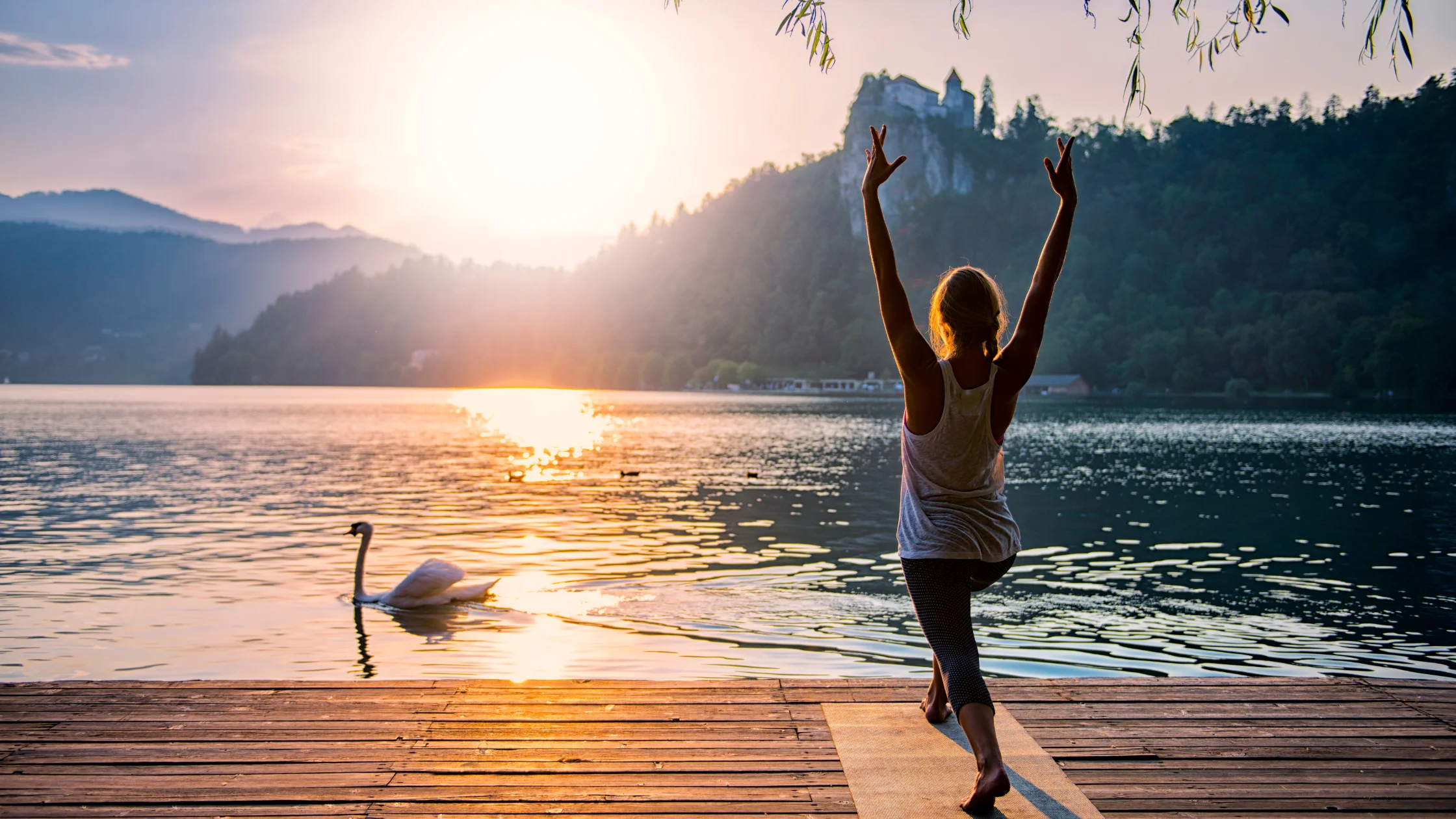
Sun Salutations, known in Sanskrit as Surya Namaskara ... are a sequence of yoga postures performed in a flowing series to warm up the body and connect movement with breath. Traditionally, yogis practiced Sun Salutations at sunrise as a ritual greeting to the sun’s energy. In fact, “Surya” means sun and “Namaskara” means to bow or salute ... essentially, each Sun Salutation is an expression of gratitude and reverence to the sun. These sequences are used in many styles of yoga (from Vinyasa to Ashtanga) as a dynamic warm-up, linking one inhale or exhale to each movement.
Sun Salutations come in a few variations commonly labeled A, B, and C, though not all yoga traditions use the exact same sequences for these letters. In this guide, we’ll explain Surya Namaskar A, B, and C in detail ... including step-by-step instructions, the purpose and benefits of each variation, and when to practice them. No matter your level (beginner to advanced), Sun Salutations can be adapted to suit you. Each sequence will help build heat, improve flexibility and strength, and focus your mind. In fact, studies show that a regular Sun Salutation practice can increase joint mobility, act as a cardio exercise (raising your heart rate in just 10 minutes), and even reduce stress and anxiety levels. Ready to salute the sun? Let’s dive into each sequence.
Surya Namaskar A (Sun Salutation A)
Purpose
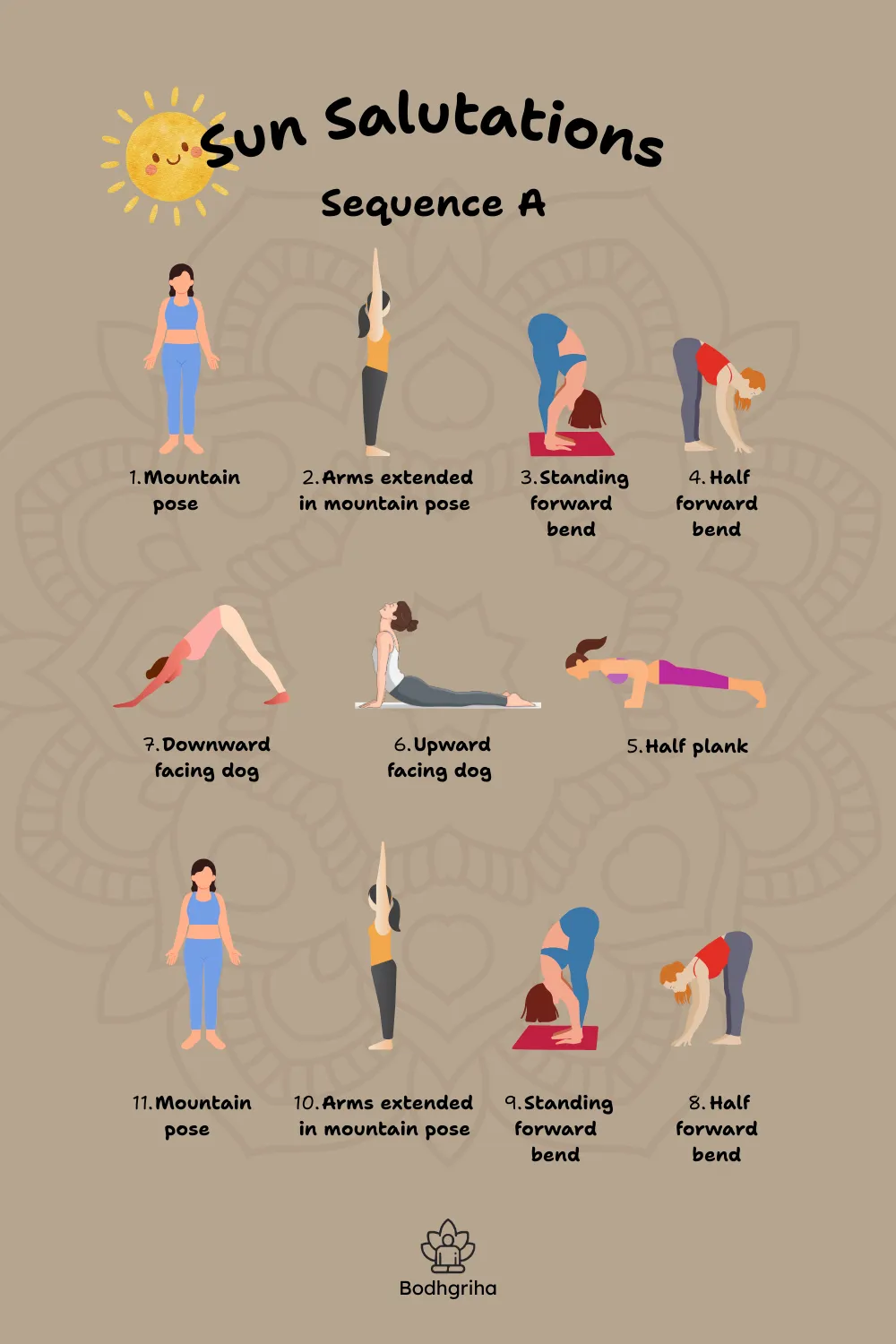
Sun Salutation A is the foundational sequence that most yoga students learn first. It contains the basic building blocks of a vinyasa flow, linking a series of about 10-12 poses that stretch and strengthen the entire body. Sun A is often used at the beginning of a yoga practice to awaken the muscles, warm up the joints, and connect your movement with your breath. Because it’s relatively simple and moderate in intensity, Surya Namaskar A is suitable for all levels.
Steps
1.Mountain Pose (Tadasana)
Begin standing tall at the top of your mat. Bring your feet hip-width apart (or together), and press your palms together at your heart in Anjali Mudra (prayer position) or at the side. Take a moment here to inhale and exhale, grounding yourself in Mountain Pose
2.Upward Salute (Urdhva Hastasana)
Inhale, sweep your arms out to the sides and up overhead. Reach toward the sky with your fingertips. You can gently arch your upper back and lift your gaze toward your hands, finding a slight backbend. Keep your core engaged and shoulders relaxed down.
3.Standing Forward Fold (Uttanasana)
Exhale, hinging at your hips, fold your torso forward. Bend your knees if needed to protect your hamstrings and lower back. Let your head hang heavy. Place your hands on the floor beside your feet (or on your shins if they don’t reach the ground). Draw your nose toward your knees in the forward bend.
4.Half Forward Fold (Ardha Uttanasana)
Inhale, lift your torso halfway up with a flat back. Lengthen your spine forward, reaching the crown of your head away from your hips. Place your fingertips on the mat (or gently rest them on your shins) as you extend your chest forward. (Think of creating an “L” shape with your body.)
5.Plank to Chaturanga Dandasana
Exhale, plant your palms and step or jump back into a plank position, then immediately begin lowering into a low push-up. Keep your hands under your shoulders and elbows close to your sides as you lower down halfway (forming a 90° angle at your elbows). Option: If you’re a beginner or building strength, drop your knees to the mat as you lower down (this is a Half Chaturanga modification). Keep your core engaged and body in a straight line.
6.Upward-Facing Dog (Urdhva Mukha Svanasana)
nhale, press into your palms and straighten your arms, scooping your chest forward and up. Open through the front of your body in this gentle backbend. The tops of your feet press into the mat, lifting your thighs and knees off the floor if possible. Draw your shoulders back and lift your heart toward the sky. (If this is too intense on your lower back, you can do a Cobra Pose (Bhujangasana) instead, keeping your thighs on the ground.)
7.Downward-Facing Dog (Adho Mukha Svanasana)
Exhale, tuck your toes under and lift your hips up and back into an inverted “V” shape. Push the floor away with your hands, lengthening your spine and pressing your chest gently toward your thighs. It’s okay if your heels don’t touch the ground ... keep a slight bend in the knees if needed. Let your head relax between your arms. Take 5 deep breaths here, feeling the gentle stretch through the backs of your legs and the strength in your arms. (Downward Dog is a great pose for building upper-body strength and relieving tension in the spine.)
8.Half Forward Fold (Ardha Uttanasana)
Inhale, look forward and step or lightly hop your feet up to the front of your mat, coming into a half lift again. Raise your torso halfway with a flat back, fingertips on the mat or shins, and lengthen through your spine.
9.Forward Fold (Uttanasana)
Exhale, soften back into the full forward fold. Let your head relax down and draw your chest toward your thighs.
10.Upward Salute (Urdhva Hastasana)
Inhale, engage your core and rise to standing, sweeping your arms out and up overhead once more. Reach tall and maybe add that gentle backward arc of the chest, gazing upward.
11.Mountain Pose (Tadasana)
Exhale, lower your arms and return to the starting position. Bring your palms together at your heart. Take a moment to notice the warmth and energy you’ve created. This completes one round of Sun Salutation A. You can repeat the sequence 2–5 more times, synchronizing with your breath, to further build heat and focus.
Benefits
- Warms up the entire body
- Builds flexibility and foundational strength
- Ideal for morning routines and beginner practice
Surya Namaskar B (Sun Salutation B)
Purpose
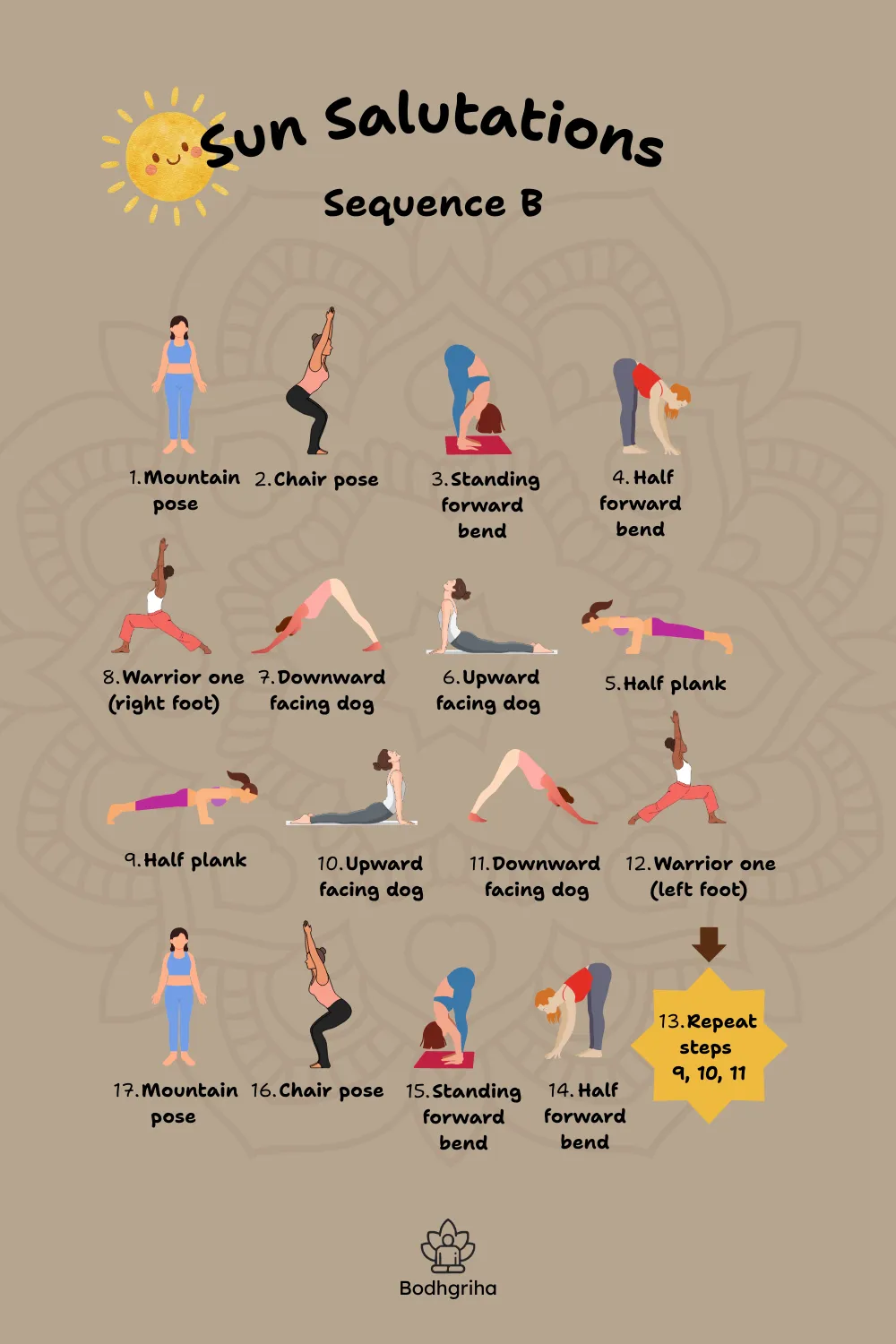
Sun Salutation B builds upon the first sequence by adding Chair Pose (Utkatasana) and Warrior I (Virabhadrasana I) to intensify the practice. It is longer and a bit more vigorous than Sun A, increasing stamina, balance, and strength. It’s often practiced after a few rounds of Sun A.
Steps
1.Mountain Pose (Tadasana)
Begin standing tall, feet together (or hip-width if more comfortable), hands in prayer at your heart or at the sides. Take a grounding breath here.
2.Chair Pose (Utkatasana)
Inhale, bend your knees and sink your hips back as if sitting in an invisible chair. At the same time, sweep your arms up overhead. Keep your weight in your heels and ensure you can still see your toes in front of your knees. Reach through your fingertips and lengthen your spine. (Utkatasana strengthens the legs and heats up the body quickly.)
3.Standing Forward Fold (Uttanasana)
Exhale, straighten your legs (if possible) as you fold forward from the hips. Bring your hands to the floor beside your feet (bend the knees if you need to). Relax your head and neck down.
4.Half Forward Fold (Ardha Uttanasana)
Inhale, lift your torso halfway up with a flat back, fingertips on the mat or shins, extending your spine forward.
5.Chaturanga Dandasana
Exhale, plant your palms and step or jump back to Plank, then lower down into Chaturanga (low push-up). Keep your body in a straight line. (Remember, you can drop your knees for a Half Chaturanga if needed.)
6.Upward-Facing Dog
Inhale, sweep your chest forward into Upward Dog. Straighten your arms, lift your chest, and roll your shoulders back. Thighs are lifted off the mat if possible, legs engaged.
7.Downward-Facing Dog
Exhale, lift your hips up and back into Downward Dog, forming an inverted V. Take a brief moment to ground through your hands and feet.
8.Warrior I (Right Side)
Inhale, step your right foot forward between your hands. Spin your left heel down onto the mat (grounding the back foot at about a 45° angle). Bend your right knee deeply over the ankle. As you stabilize your legs, lift your torso and sweep your arms up toward the sky. Reach up in Warrior I, palms facing or touching, and gaze upward. Keep your front knee bent and your back leg straight and strong. This pose opens your hips slightly and stretches the legs while building strength.
9.Chaturanga Dandasana
Exhale, frame your front foot with your hands and step the right foot back to plank. Lower yourself down into Chaturanga again, elbows hugging your ribs. (Use your knees if you need a modification here - Sun B has multiple Chaturangas, which is why it’s more intense on the upper body.)
10.Upward-Facing Dog
Inhale, flow into Up Dog once more, opening the chest and arching the spine.
11.Downward-Facing Dog
Exhale, roll over your toes and lift back into Downward Dog.
12.Warrior I (Left Side)
Inhale, step your left foot forward between your hands. Pivot your right heel down flat. Rise up into Warrior I on the left side: front knee bent deeply, back foot rooted, arms reaching overhead. Square your shoulders and chest toward the front as much as your flexibility allows. Warrior I strengthens the legs, ankles, and back while stretching the hips and upper body.
13.Chaturanga Dandasana
Exhale, plant your palms, step the left foot back to plank and lower down through Chaturanga again. (Yes, this is the third low push-up of the sequence - feel those arms working!) Keep the core strong and elbows in.
14.Upward-Facing Dog
Inhale, flow into your backbend, lifting chest upward. Draw shoulders down away from ears.
15.Downward-Facing Dog
Exhale, lift hips back into Down Dog. Now hold Downward Dog for 5 breaths. Breathe deeply, allowing your heart rate to normalize a bit. You have completed the main vigorous part of Sun B; this Down Dog is an opportunity to find steadiness. On your last exhale, prepare to move forward.
16.Half Forward Fold
Inhale, bend your knees slightly, look forward, and step or hop both feet to the front of your mat. Lift your chest halfway up, flattening your back.
17.Forward Fold
Exhale, fold down over your legs, relaxing your head.
18.Chair Pose
Inhale, bend your knees and sweep your arms up, coming back into Chair Pose (just like step 2). Sink your hips low as if sitting back, and reach up strongly through the arms.
19.Mountain Pose
Exhale, straighten your legs and return to standing. Bring your hands to prayer at your heart, finishing the sequence where you began. Take a moment to notice your elevated warmth and heart rate - Sun Salutation B is truly invigorating!
Benefits
- Builds cardiovascular strength and endurance
- Deepens leg and arm engagement
- Adds complexity and balance challenge
Surya Namaskar C (Sun Salutation C)
Purpose
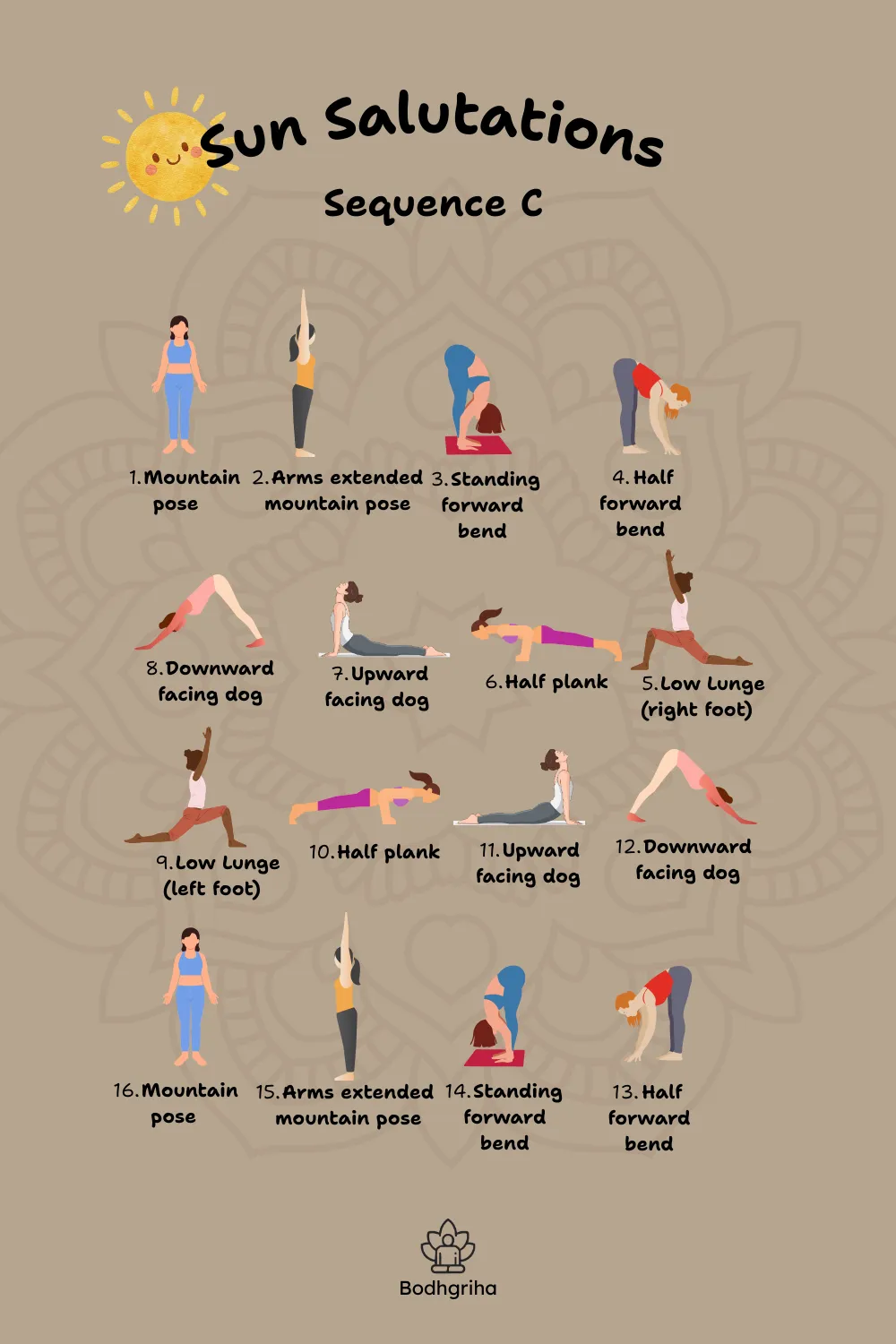
Sun Salutation C is a gentler variation, commonly used in Hatha or beginner yoga. It includes Low Lunge and Knees-Chest-Chin (Ashtanga Namaskara) instead of Chaturanga and Warrior poses. This version emphasizes stretching and can be practiced in the afternoon or evening for relaxation.
Steps
1.Mountain Pose (Tadasana)
Start standing tall with feet hip-width apart. Join your palms at your heart in prayer. Take a couple of deep breaths, finding a steady stance and a calm mind.
2.Upward Salute (Urdhva Hastasana)
Inhale, sweep your arms out to the sides and overhead. Look upward and gently arch through your upper back, lifting your heart. Keep your shoulders down away from your ears.
3.Standing Forward Fold (Uttanasana)
Exhale, hinge at your hips and fold forward. Bend your knees as much as needed so that you can fold comfortably. Let your hands come to the floor beside your feet (or on blocks/shins if you can’t reach). Draw your nose toward your knees. Feel the stretch along the back of your body.
4.Half Forward Fold (Ardha Uttanasana)
Inhale, lift your torso halfway up with a flat back, fingertips staying on the mat or coming to your shins. Lengthen your spine forward, crown reaching away from your tailbone.
5.Low Lunge (Right Leg Back)
Exhale, step your right foot to the back of your mat, coming into a lunge with your left knee bent over the left foot. Lower your right knee to the ground (a classic low lunge). Keep your fingertips on the floor for balance. Sink your hips forward slightly and feel the stretch in your right hip flexor. (If you’re comfortable and want a deeper stretch, you can lift your arms up overhead in this low lunge, but it’s optional.)
6.Plank
Inhale, step your left foot back to meet the right, coming into a straight-arm Plank. Your wrists are under shoulders, and your body forms one line from head to heels. Engage your core and thighs. (If needed, you can drop your knees here for a modified plank.)
7.Knees, Chest & Chin
Exhale, lower your knees to the mat. Keep your hips lifted and elbows tucked in. Lower your chest and chin down to the floor (chest between your hands, chin touching the mat) while your hips stay slightly elevated. Your bum will be up and your spine fairly arched – this eight-point pose touches the ground with your toes, knees, chest, palms, and chin. It’s a beginner-friendly alternative to Chaturanga that builds arm strength gently.
8.Cobra Pose (Bhujangasana)
Inhale, slide your chest forward and lift it up into a low Cobra. Press the tops of your feet into the mat and draw your shoulders back. In Cobra, your hands are under your shoulders and you lift only your chest (lower ribs stay on the ground). Use your back muscles more than your arms. This gives a nice stretch to the spine without too much strain.
9.Downward-Facing Dog
Exhale, tuck your toes under and push up into Downward Dog. Lift your hips high and lengthen your spine. You can keep knees soft if your hamstrings are tight. Press evenly through your hands. It’s okay if your heels are off the ground. Hold for 3–5 breaths in Down Dog, breathing slowly through your nose. Let this be a moment of rest; feel free to pedal your feet (bending one knee at a time) to loosen up your calves. On your final exhale, prepare to step forward.
10.Low Lunge (Right Leg Forward)
Inhale, step your right foot forward between your hands (from Down Dog). Lower your left knee to the mat, coming into a low lunge on the other side. Ensure your right knee is above your right ankle. You can keep fingertips down for balance. If you like, lift your arms up to deepen the stretch, opening through the front of the left hip.
11.Standing Forward Fold
Exhale, step your left foot forward to meet the right at the top of the mat, coming back into a forward fold. Let your head hang and relax into the stretch. (This is the same as step 3.)
12.Upward Salute
Inhale, press into your feet and sweep your arms out and up, rising to stand. Reach overhead, maybe adding a gentle backbend as you gaze upward.
13.Mountain Pose
Exhale, return to the starting position, hands in prayer at your chest or at the sides.
That completes one half-round of Sun Salutation C. Now repeat the sequence, stepping the left leg back in the lunge in Step 5, and the left leg forward in Step 10, to balance the other side.
Benefits
- Beginner-friendly and relaxing
- Less upper-body strength required
- Suitable for gentle or meditative flows
Conclusion
Whether you choose Sun Salutation A, B, or C, each brings unique benefits to your yoga practice:
- A = foundational, moderate, and flowing
- B = dynamic, strength-building
- C = gentle, stretchy, and meditative
Choose the variation that suits your energy and goals. Combine all three to create a varied, balanced yoga routine.
Enjoyed this guide? Sign up for our newsletter to receive more yoga tips, guided flows, and wellness insights.
Share this article