Breathwork for Anxiety: 5 Scientifically Backed Breathing Techniques to Reduce Stress
Discover five research-supported breathwork techniques ... from diaphragmatic breathing to cyclic sighing, to ease anxiety, lower stress and restore calm in minutes.
Anxiety can creep up at any time ... draining energy, clouding thoughts, and tightening muscles. What if something as simple as conscious breathing could help you find calm in those moments? Research increasingly supports breathwork (controlled breathing exercises) as a powerful tool to reduce anxiety, lower stress, and balance the nervous system.
In this blog, we’ll explore five evidence-based breathing techniques, how they work, why they help, and tips for integrating them into daily life ... plus what to expect when you start.
How Breathwork Affects the Body & Mind
Before diving into techniques, it helps to understand why breath matters.
- Breath isn’t just for oxygen ... it regulates your nervous system. Slow, controlled breathing activates the parasympathetic nervous system, reducing the “fight-or-flight” stress response and promoting calm.
- Breathwork can increase heart rate variability (HRV) ...an important marker of resilience and emotional regulation. Higher HRV is linked to reduced anxiety and better stress response.
- Conscious breathing also influences brain rhythms and emotional circuits, helping shift mood and mental state toward clarity and calm.
Because of these effects, even 5–10 minutes of breathwork can begin to calm the mind, relax the body, and ease anxiety.
Five Breathwork Techniques for Anxiety Relief
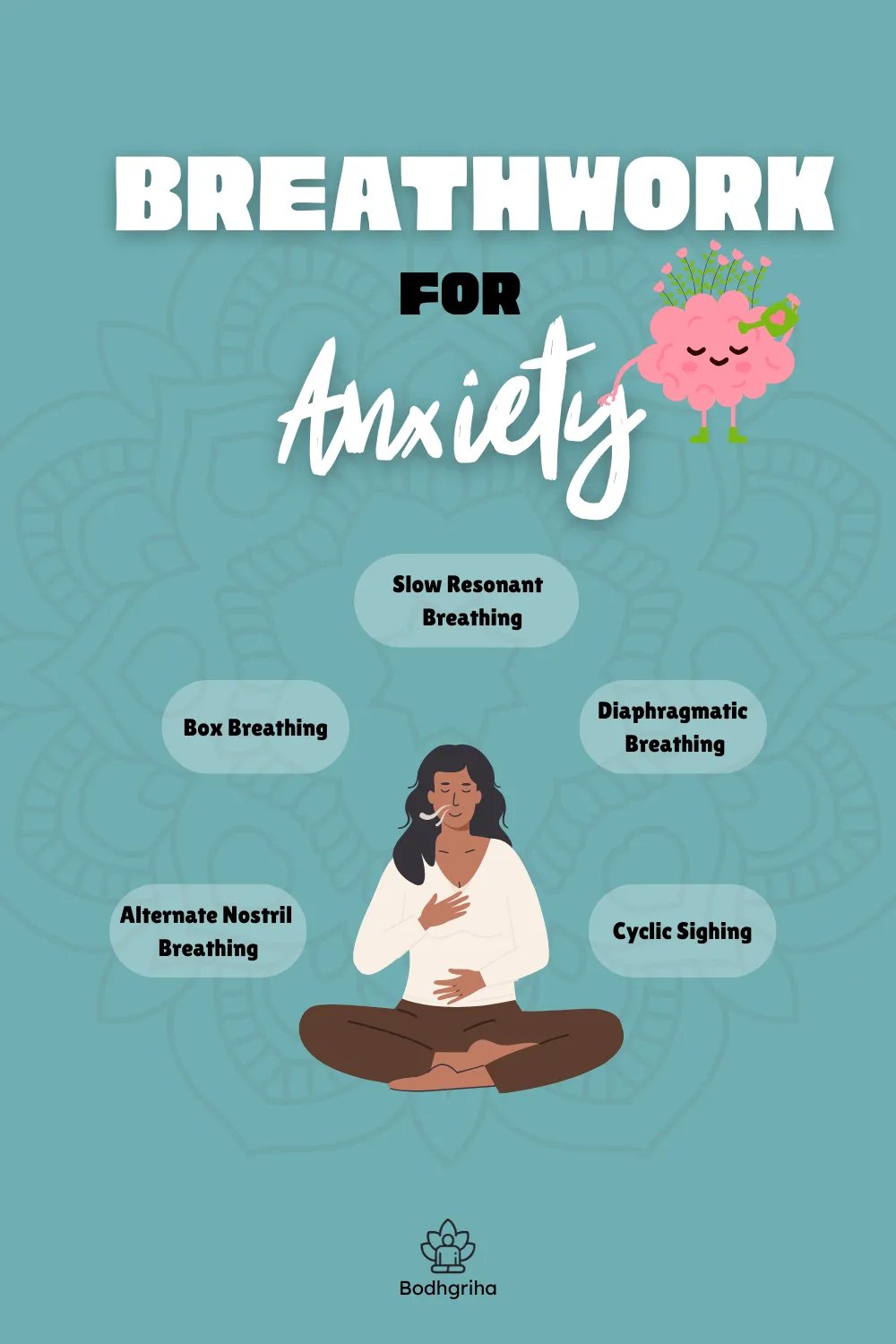
1. Diaphragmatic (Belly) Breathing
How to do it:
Sit or lie comfortably. Inhale slowly through your nose, expanding your belly (not your chest). Exhale gently while drawing your belly toward your spine.
Why it helps:
Encourages full oxygen exchange and stimulates the vagus nerve, which promotes relaxation and lowers heart rate. Many therapists recommend this as the simplest breath-centered practice for calming anxiety.
When to use:
First thing in the morning; before bed; during anxiety spikes or high stress moments.
2. 4-7-8 / Box Breathing (Sama Vritti / Square Breathing)
How to do it:
- Inhale for 4 counts
- Hold breath for 4 counts
- Exhale for 4 counts
- Hold outbreath for 4 counts
- Repeat 6–10 cycles
Why it helps:
Regulates breathing rhythm and balances autonomic nervous activity, helping to quiet mental chatter and ease nervous tension. Studies on controlled breathing show marked decreases in anxiety and improved calm.
When to use:
Before sleep; during stressful meetings; when feeling overwhelmed.
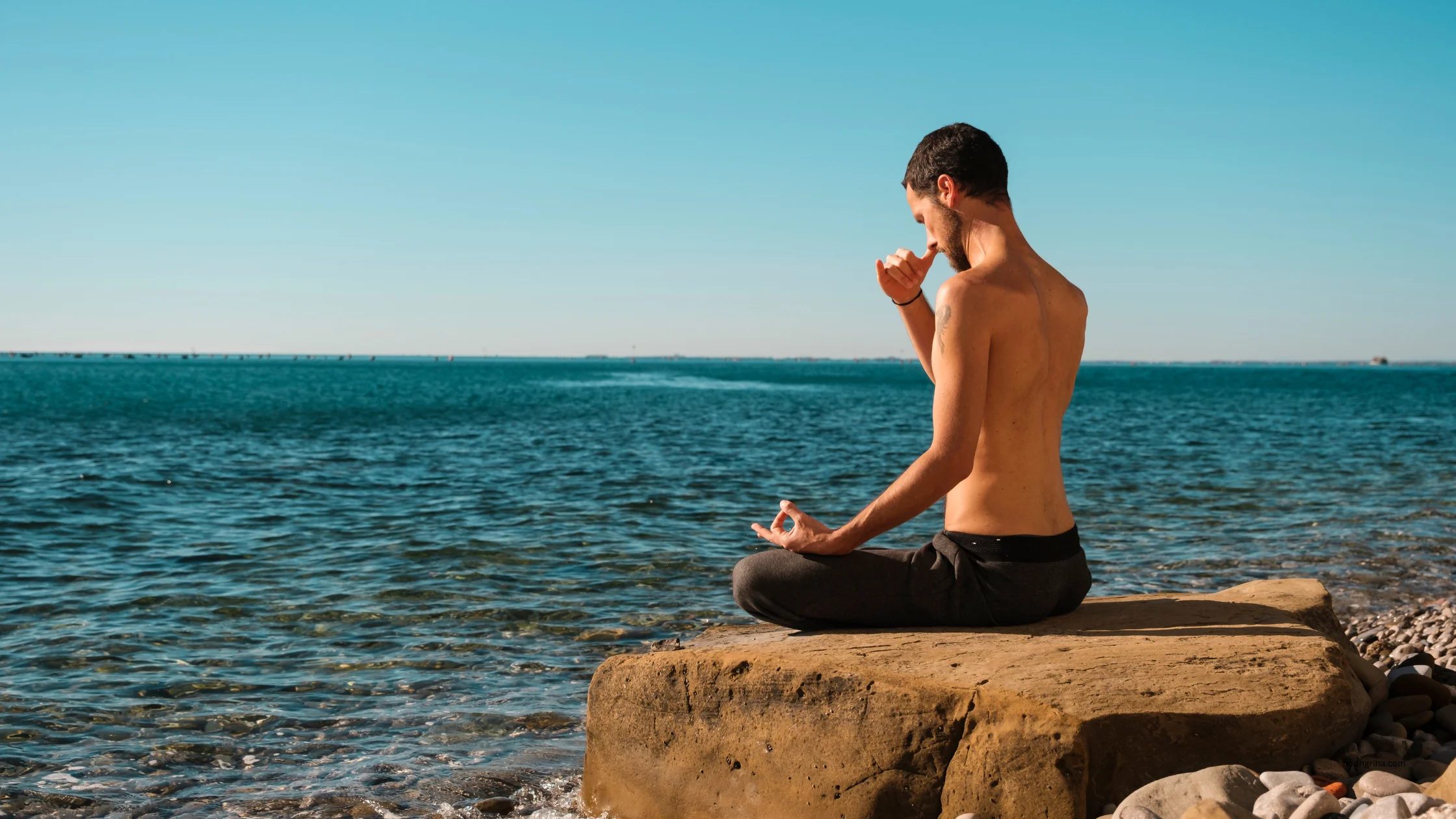
3. Alternate Nostril Breathing (Nadi Shodhana / Anuloma-Viloma)
How to do it:
- Close your right nostril and inhale slowly through the left.
- Close the left nostril, hold briefly.
- Exhale through the right.
- Inhale through the right, then switch and exhale through the left.
- Continue for 5–10 minutes.
Why it helps:
This yogic pranayama balances the left/right hemispheres of the brain and harmonises nervous system energy. Studies report reductions in anxiety and improved mental equilibrium after regular practice.
When to use:
Morning practice, during meditation, or when you want to reset mental balance.
4. Cyclic Sighing / Extended Exhale Breathing
How to do it:
Take a slow, deep inhale through the nose, then slowly exhale through the mouth with a gentle sigh or soft “haa” sound. Aim for a longer exhale than inhale. Repeat for 3–5 minutes.
Why it helps:
Research shows cyclic sighing significantly improves mood and reduces physiological arousal more effectively than meditation alone. It slows breathing rate and eases anxiety quickly ... great for sudden panic or tension.
When to use:
During panic attacks, or anytime you need quick calm (e.g., before public speaking, stressful tasks, or travel).
5. Slow Resonant (Coherent) Breathing (~5 breaths per minute)
How to do it:
Breathe in for about 6 seconds, then exhale for about 6 seconds, achieving roughly 5 breaths per minute. Use a smooth, even rhythm and focus on calming your mind.
Why it helps:
This breathing pattern aligns with your heart’s natural rhythm, improves heart rate variability, supports autonomic balance, and can promote long-term resilience to stress, anxiety, and mood disturbances.
When to use:
As a daily practice ... morning or evening; before stressful events; or anywhere quiet.
How to Build a Breathwork Routine
1.Start small – Even 5 minutes a day can bring noticeable calm.
2.Be consistent – Daily practice (morning or evening) fosters deeper nervous-system regulation over time.
3.Track quality over duration – It’s more effective to do shorter sessions with mindful breathing than to rush longer sessions.
4.Listen to your body – If you feel dizzy or light-headed, ease up or stop; breathe gently and comfortably.
5.Pair it with healthy habits – Hydrate, rest, move gently, and avoid stimulants (like caffeine or screen time) right after breathwork for better results.
What Research Says - The Benefits of Breathwork for Anxiety
- A broad systematic review of breathing-based interventions concluded breathwork significantly reduces self-reported stress, anxiety, and depression compared to control conditions.
- Multiple controlled studies showed improvements in anxiety levels, mood stability and even immune function among participants practising breathwork exercises including pranayama and slow breathing.
- Neurophysiological research reveals that slow breathing enhances autonomic flexibility, improves heart-rate variability, and engages brain activity associated with emotional regulation and calm.
- Even brief practices like 5 minutes of cyclic sighing can outperform mindfulness meditation in lowering arousal and negative emotions, making breathwork a practical tool for quick anxiety relief.
While breathwork is not a guaranteed “cure,” and more high-quality research is needed for chronic anxiety disorders, the evidence points to breathwork as a powerful, accessible, and science-backed method for managing everyday stress and anxiety and as a valuable companion to therapy or other treatments when needed.
Cautions & Best Practices
- If you have respiratory or cardiovascular conditions (e.g., asthma, high/low blood pressure), consult a healthcare professional before starting intense breathwork. Slow, gentle methods like diaphragmatic breathing are often safest.
- Always practice in a safe, stable environment (sitting or lying down, with focus and attention).
- Breathwork helps ... but it is not a substitute for therapy or medical treatment for anxiety disorders. Use it as a supportive tool, not a standalone solution.
Final Thoughts
Breath is the thread that connects body and mind. Thoughtful breathwork ... especially approaches like diaphragmatic breathing, alternate-nostril breathing, cyclic sighing, box breathing, or coherent breathing ... can be a powerful daily ally against anxiety, stress, and emotional overload.
If you’re new to breathwork, pick just one simple technique (like belly breathing or cyclic sighing). Practice for 5–10 minutes daily, and observe how your body and mind respond over time. Consistent breathwork can build resilience, calm, clarity and help you navigate life’s ups and downs with greater presence and ease.
Share this article