Yoga for Stress Relief: A Grounding 9-Pose Sequence to Calm the Mind
Release tension and reset your nervous system with this gentle yoga for stress relief sequence. Follow 9 grounding poses with alignment tips, breath guidance, and ideal hold times to feel calmer and more centered.
Stress often pulls the mind forward while leaving the body tense and disconnected. This yoga sequence is designed to bring you back into the present moment through steady movement, mindful breathing, and grounding postures.
Practice this flow when you feel overwhelmed, mentally fatigued, or in need of a gentle reset. Move slowly, prioritize your breath, and let the practice meet you where you are.
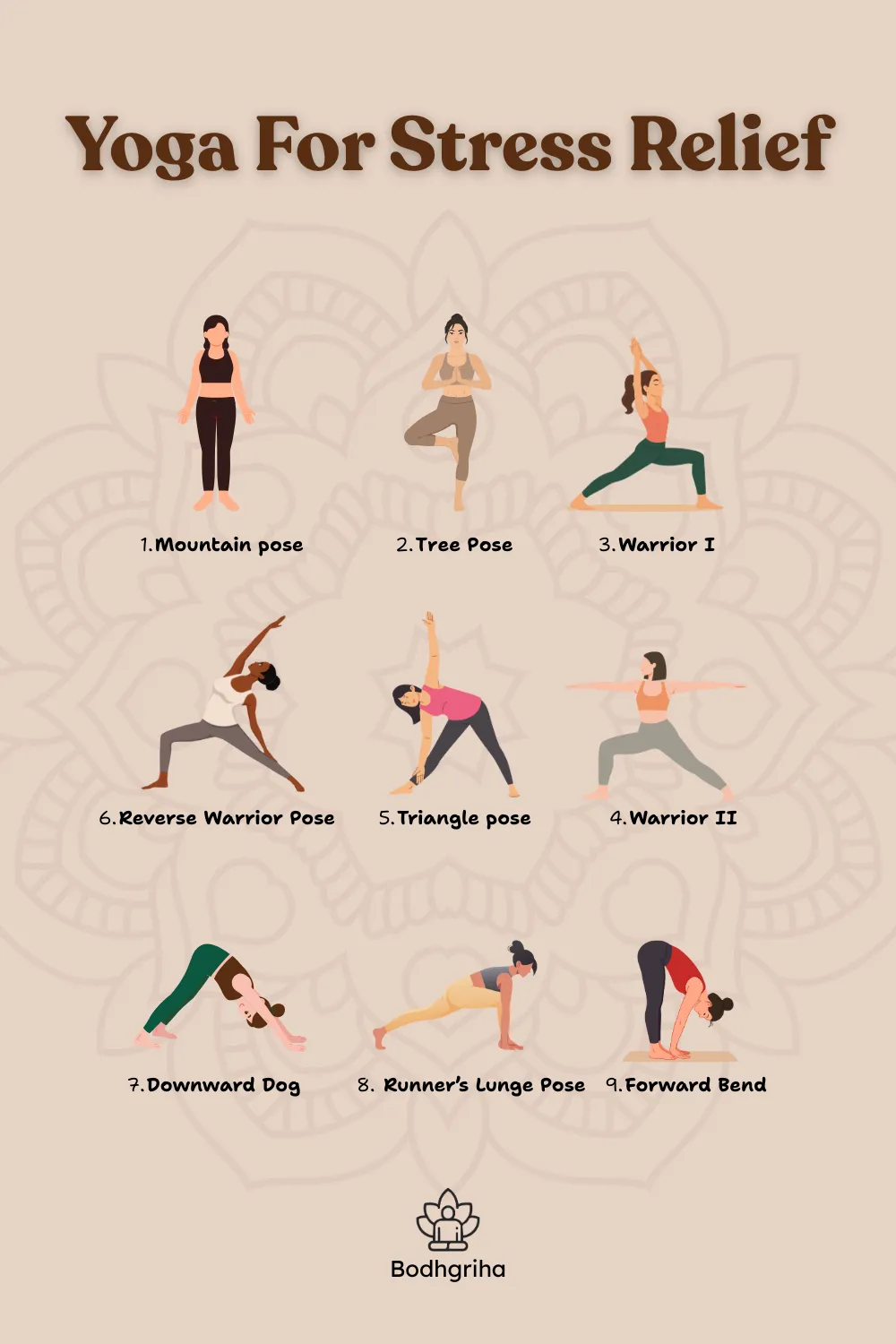
1. Mountain Pose (Tadasana)
Purpose: Grounding, posture awareness, nervous system settling
Alignment Tips:
- Stand tall with feet hip-width or together
- Distribute weight evenly across all four corners of the feet
- Soften the shoulders and lengthen the spine
- Let arms rest naturally by your sides or palms facing forward
Breath Guidance:
Slow, steady nasal breathing. Inhale to lengthen, exhale to soften.
Hold Time:
5–10 slow breaths
2. Tree Pose (Vrksasana)
Purpose: Balance, focus, mental steadiness
Alignment Tips:
- Shift weight into one foot, place the other foot on calf or inner thigh
- Press standing foot firmly into the mat
- Bring hands to heart center or overhead
- Keep hips facing forward
Breath Guidance:
Smooth inhales to grow taller, long exhales to steady the mind.
Hold Time:
5–8 breaths each side
3. Warrior I (Virabhadrasana I)
Purpose: Strength, confidence, grounded energy
Alignment Tips:
- Step one foot back, heel grounded or lifted
- Front knee bends over ankle
- Hips square forward
- Reach arms overhead while keeping shoulders relaxed
Breath Guidance:
Inhale to lift the chest and arms, exhale to ground through the legs.
Hold Time:
6–10 breaths each side
4. Warrior II (Virabhadrasana II)
Purpose: Stability, resilience, mental clarity
Alignment Tips:
- Open hips and torso to the side
- Front knee stacks over ankle
- Arms extend in opposite directions at shoulder height
- Gaze softly over front fingertips
Breath Guidance:
Deep, even breaths. Let each exhale release tension from the jaw and shoulders.
Hold Time:
8–12 breaths each side
5. Triangle Pose (Trikonasana)
Purpose: Release tension, expand breath, improve circulation
Alignment Tips:
- Straighten front leg without locking the knee
- Hinge at the hip, reach forward before lowering the hand
- Keep chest open and spine long
- Use a block if needed for support
Breath Guidance:
Inhale to expand the chest, exhale to soften into the pose.
Hold Time:
6–10 breaths each side
6. Reverse Warrior (Viparita Virabhadrasana)
Purpose: Gentle heart opening, side-body stretch
Alignment Tips:
- Bend front knee, keep back leg strong
- Slide back hand down the rear leg lightly
- Lift front arm overhead and lean back gently
- Avoid collapsing into the lower back
Breath Guidance:
Inhale to create space along the side body, exhale to relax the neck and face.
Hold Time:
5–8 breaths each side
7. Downward-Facing Dog (Adho Mukha Svanasana)
Purpose: Full-body release, calming the nervous system
Alignment Tips:
- Hands shoulder-width, fingers spread wide
- Hips lift high, knees can stay bent
- Lengthen spine rather than forcing heels down
- Relax the head and neck
Breath Guidance:
Slow, deep breaths. Exhale fully to encourage relaxation.
Hold Time:
8–12 breaths
8. Runner’s Lunge
Purpose: Hip release, grounding, preparation for stillness
Alignment Tips:
- Step one foot forward between hands
- Back knee lifted or lowered
- Keep spine long, chest open
- Hands on mat or blocks for support
Breath Guidance:
Inhale to lengthen through the spine, exhale to soften the hips.
Hold Time:
6–10 breaths each side
9. Forward Bend (Uttanasana)
Purpose: Nervous system reset, introspection, release
Alignment Tips:
- Fold from the hips with knees slightly bent
- Let head and arms hang heavy
- Shift weight slightly toward the balls of the feet
- Relax the neck and jaw completely
Breath Guidance:
Long exhales to signal the body it’s safe to relax.
Hold Time:
10–15 breaths
End your practice by standing quietly or sitting for a few moments. Notice the quality of your breath and how your body feels compared to when you began.
Practiced consistently, this sequence can become a powerful tool for managing stress, restoring balance, and reconnecting with yourself...anytime, anywhere.
Share this article