16-Pose Yoga Flow: Complete Sequence with Alignment Tips
Learn a complete 16-pose yoga flow with detailed alignment cues and hold times. Includes modifications for all levels. Build strength, flexibility, and calm.
Yoga flow isn't about moving quickly through poses-it's about moving with intention, breath, and awareness. This 16-pose sequence is designed to warm your body, build strength, increase flexibility, and leave you feeling energized yet grounded. Whether you're a beginner or experienced practitioner, this flow can be adapted to your level while maintaining the essential benefits.
This sequence moves through standing poses for activation, forward and back bends for flexibility, twists for detoxification, and a restorative finish. The entire flow takes 20-30 minutes depending on how long you hold each pose and how mindfully you move between them.
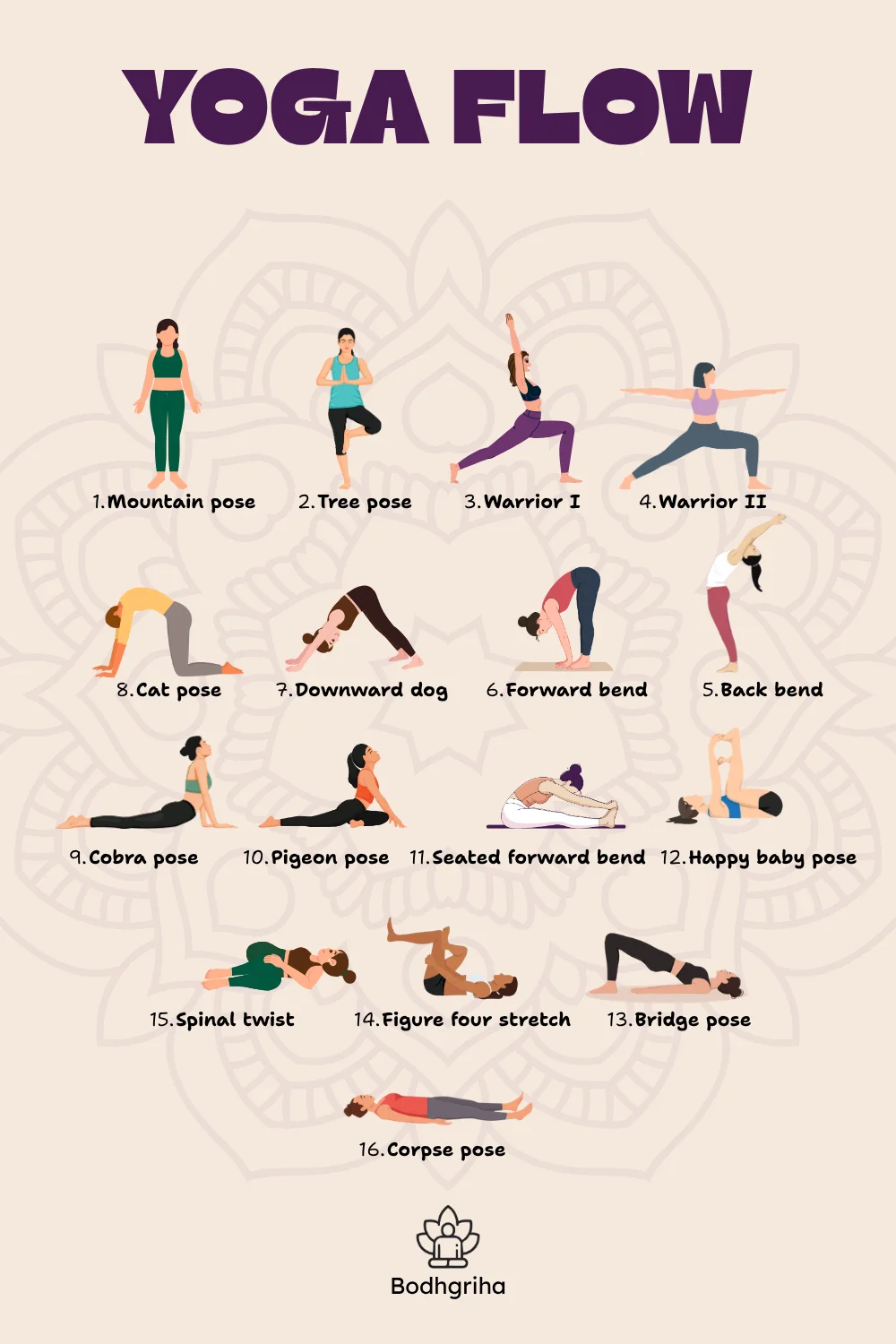
1. Mountain Pose (Tadasana) - Foundation & Grounding
Hold: 5 breaths (30-60 seconds)
Mountain pose establishes your foundation and begins the practice with presence and stability.
Alignment tips: - Stand with feet hip-width apart, with weight evenly distributed across all four corners of your feet - Press your feet firmly into the ground, engaging your leg muscles - Lengthen your spine upward while relaxing your shoulders down and back - Keep your arms at your sides with palms facing forward, fingers spread wide - Engage your core gently, maintaining a neutral pelvis - Gaze straight ahead with a long neck - Feel the connection between your body and earth
Benefits: Improves posture, grounds nervous system, establishes mind-body connection, builds stability
Modification: If balancing is difficult, practice near a wall
2. Tree Pose (Vrksasana) - Balance & Focus
Hold: 5 breaths each side (30-60 seconds per side)
This standing balance pose strengthens legs, opens hips, and develops focus.
Alignment tips: - From Mountain Pose, shift weight into your left foot, pressing it firmly into the ground - Bend your right knee and place your right foot on your inner left thigh (above the knee to protect the joint) - Your right knee points out to the side, opening the hip - Press your right foot into your left thigh; press your left thigh into your right foot (engagement) - Bring your hands to heart center or raise them overhead in a V-shape - Square your shoulders and hips forward - Gaze at a fixed point (drishti) to aid balance - Repeat on the other side
Benefits: Strengthens ankles and legs, opens hips, improves balance and concentration, builds confidence
Modification: Keep your right toes on the ground with heel raised; place your foot on your inner calf instead of thigh
3. Warrior I (Virabhadrasana I) - Strength & Power
Hold: 5 breaths each side (30-60 seconds per side)
Warrior I builds strength in legs, opens hips and chest, and cultivates mental focus.
Alignment tips: - From Mountain Pose, step your left foot back about 3-4 feet, turning it out 45 degrees - Square your hips forward as much as possible (this is the key challenge) - Bend your right knee, stacking it over your ankle - Your right thigh aims toward parallel with the ground (or as deep as alignment allows) - Keep your left leg straight and strong, with foot pressing into the ground - Raise your arms overhead with shoulders relaxed down, biceps by ears - Press your back heel down firmly - Lengthen your spine upward through the crown of your head - Repeat on the other side
Benefits: Builds leg strength, opens hip flexors, strengthens core, increases stamina, cultivates inner strength
Modification: If hip flexibility is limited, allow your back hip to open slightly (45-90 degrees instead of fully square)
4. Warrior II (Virabhadrasana II) - Stability & Determination
Hold: 5 breaths each side (30-60 seconds per side)
Warrior II builds strength and stability while opening the hips in a different direction.
Alignment tips: - From Warrior I, open your hips to face the side of the mat (hips square to the long edge) - Your front knee stacks over your ankle; aim for your front thigh parallel to ground - Keep your back foot flat, toes turned out 45-60 degrees, leg straight and engaged - Extend your arms shoulder-height, reaching equally through both fingertips - Square your shoulders directly over your hips - Gaze over your front fingertips (drishti) - Press your back heel down firmly - Repeat on the other side
Benefits: Strengthens legs and core, builds stamina, opens hips, improves focus and determination
Modification: If knee discomfort, don't bend as deeply; keep front thigh at 45 degrees rather than parallel
5. Back Bend (Supported Backbend) - Heart Opening
Hold: 5 breaths each side (30-60 seconds per side)
This gentle backbend opens the chest and front body after warrior poses.
Alignment tips: - From Warrior II (left leg back), straighten your front right leg slightly - Place your right hand on your right hip or sacrum for support - Keep your shoulders relaxed down and back - Gently arch back through your upper back, not your lower back - Keep your neck neutral-don't drop your head back unless very flexible - Press your hips forward to counter the backbend - Breathe into the chest and front of your body - Repeat on the other side
Benefits: Opens chest and shoulders, energizes the body, improves spinal flexibility, counteracts forward-bending activities
Modification: Place hands on a block for more support; keep hands on hips and simply arch gently without hand support
6. Forward Bend (Uttanasana) - Release & Surrender
Hold: 8-10 breaths (60-90 seconds)
Forward bend stretches the entire back body and calms the mind.
Alignment tips: - From Mountain Pose, take a deep breath - As you exhale, hinge from your hips (not rounding from your lower back) - Let your head and neck relax; don't force straightness - Hands can rest on the ground, shins, blocks, or just hang - Keep your knees slightly bent if hamstring tightness prevents your hips from folding - Press your feet firmly into the ground - Relax your neck completely; don't look forward - Let gravity do the work; don't force the stretch - Breathe deeply, allowing yourself to relax further with each exhale
Benefits: Stretches hamstrings, calves, and spine; calms nervous system; relieves tension; improves digestion
Modification: Bent knees significantly; hands on blocks; place forearms on a chair for more support
7. Downward-Facing Dog (Adho Mukha Svanasana) - Inversion & Strength
Hold: 5-8 breaths (60-90 seconds)
Downward Dog is a foundational pose that strengthens arms, opens shoulders, and provides an inversion.
Alignment tips: - From Forward Bend, place hands on the ground shoulder-width apart, fingers spread wide - Press firmly through your palms, especially thumb and forefinger mound - Step or jump your feet back, hip-width apart - Your body forms an inverted V-shape - Engage your arms; don't sink into your shoulders - Spread your shoulder blades wide across your back - Keep your head neutral; don't look forward or back - Press your feet firmly; heels can stay lifted or press toward the ground - Weight should be evenly distributed between hands and feet - Breathe fully here; let your head relax
Benefits: Strengthens shoulders and arms, opens hamstrings and calves, provides mild inversion, energizes the body, builds focus
Modification: Knees bent; hands on a block; feet wider apart for less hamstring stretch
8. Cat Pose (Marjaryasana) - Spinal Mobility
Hold: 5 breaths (30-60 seconds), flowing with Cow
Cat Pose mobilizes the spine and releases tension from the back body.
Alignment tips: - From Downward Dog, lower your knees to the ground - Come to all fours: hands under shoulders, knees under hips, wrists under elbows - As you exhale, round your spine completely, pressing your chest forward and drawing your chin toward your chest - Press your palms firmly into the ground, spreading your shoulder blades wide - Your entire spine curves in a C-shape; this should feel like a release - Engage your core; don't sink into your lower back - This flows with Cow Pose, move between them with breath
Benefits: Mobilizes spine, releases tension, massages internal organs, connects breath with movement
Modification: If wrist discomfort, come to forearm plank position instead
9. Cobra Pose (Bhujangasana) - Back Strengthening
Hold: 5 breaths (30-60 seconds)
Cobra strengthens the back, opens the chest, and provides a gentle backbend.
Alignment tips: - From Table Pose (hands and knees), lower your hips and extend your legs straight, tops of feet on ground - Place hands under shoulders, elbows hugging into your ribs (not flared out) - Press your feet and thighs firmly into the ground - As you inhale, press through your hands to lift your chest forward and up - Your shoulders stay down and back; don't shrug toward ears - Keep your elbows slightly bent, not fully straightened - Your pubic bone and thighs remain on the ground (unlike Upward Dog) - Lengthen your neck; look down or slightly forward - Engage your core to protect your lower back - Press your feet into the ground for stability
Benefits: Strengthens back muscles, opens chest and shoulders, improves posture, energizes the body
Modification: Keep forearms on the ground instead of hands (low Cobra); press only partially up
10. Pigeon Pose (Eka Pada Rajakapotasana Prep) - Deep Hip Opening
Hold: 10-15 breaths (90-120 seconds) each side
Pigeon is an intense hip opener that releases deep hip tension.
Alignment tips: - From Downward Dog or Table Pose, bring your right knee behind your right wrist - Your right ankle comes toward your left hip (or wherever comfortable) - Square your hips forward as much as possible; this is challenging - Keep your back leg straight with hip pointing down - Place your hands on the ground in front of you, or walk them forward to fold - Don't force deeper than feels good; this pose is intense - Breathe deeply into any sensation in your hip - Let gravity and your breath do the work - Repeat on the other side
Benefits: Opens hips deeply, releases IT band and glutes, improves hip mobility, can be emotionally releasing
Modification: Place a block under your right hip for support; stay more upright instead of folding forward; keep back knee bent
11. Seated Forward Bend (Paschimottanasana) - Full-Body Stretch
Hold: 10-15 breaths (90-120 seconds)
This seated forward fold stretches the entire back of your body.
Alignment tips: - Sit with both legs extended in front of you (Dandasana) - Flex your feet, pressing your heels into the ground - Engage your quadriceps to support your hamstrings - As you inhale, lengthen your spine - As you exhale, hinge from your hips, folding forward - Hands can rest on shins, ankles, or ground beside your feet - Don't round your lower back excessively; hinge from hips first - Keep your head and neck relaxed; this isn't about reaching your toes - Breathe deeply; let yourself relax further with each exhale - If hamstrings are tight, bend knees significantly
Benefits: Stretches hamstrings, calves, and entire back side of body; calms nervous system; improves forward flexibility
Modification: Significant knee bend; hands on blocks; place a folded blanket under your sit bones for elevation
12. Happy Baby Pose (Ananda Balasana) - Hip & Spine Release
Hold: 8-10 breaths (60-90 seconds)
Happy Baby is a playful pose that opens hips and gently stretches the lower back.
Alignment tips: - Lie on your back with knees bent toward your chest - Grab the outside edges of your feet with your hands (or inside of ankles) - Stack your ankles over knees, creating 90-degree angles at knees and hips - Gently press your knees toward the ground (or as far as comfortable) - Keep your lower back on the ground; don't let it arch - You can gently rock side-to-side for a massage effect - Relax your neck and shoulders into the ground - Smile; this pose is meant to feel joyful
Benefits: Opens hips, gently stretches lower back, releases pelvic tension, aids digestion, feels playful and rejuvenating
Modification: Don't grab your feet; rest hands on shins; keep one foot on ground while the other leg opens
13. Bridge Pose (Setu Bandhasana) - Back Strengthening & Hip Opening
Hold: 5-8 breaths (60-90 seconds)
Bridge Pose strengthens glutes and back while opening the front of the hips.
Alignment tips: - Lie on your back with knees bent, feet hip-width apart and parallel - Feet should be positioned so your ankles are under knees - Press your feet into the ground and lift your hips toward the ceiling - Your shoulders stay on the ground; clasp hands under your back and press shoulders down - Your knees stay directly over ankles; don't let them splay outward - Engage your glutes and core throughout - Press your chest toward your chin (don't turn your head) - Your weight is distributed between your feet and shoulders - Breathe fully; don't hold your breath
Benefits: Strengthens glutes, hamstrings, and back; opens hip flexors and chest; energizes body; improves posture
Modification: Keep hands at sides, palms down, for less intensity; don't clasp hands behind back; place a block between thighs to ensure proper alignment
14. Figure Four Stretch (Sucirandhrasana) - Hip & Glute Release
Hold: 8-10 breaths (60-90 seconds) each side
Figure Four is an effective hip opener that targets glutes and external hip rotators.
Alignment tips: - Lie on your back with knees bent, feet on the ground - Cross your right ankle over your left knee, creating a "4" shape - Interlace your hands behind your left thigh and gently pull it toward your chest - Your right hip opens as you draw your left leg closer - Keep your head and shoulders relaxed on the ground - Breathe into the sensation in your right hip - Don't force the stretch; let gravity work - Repeat on the other side
Benefits: Opens hips, releases glutes, improves external hip rotation, eases sciatic pain, feels incredibly releasing
Modification: Place hands behind your left thigh instead of interlacing hands; keep left foot on ground for less intensity
15. Spinal Twist (Supta Matsyendrasana) - Detoxification & Spine Mobility
Hold: 8-10 breaths (60-90 seconds) each side
Spinal Twist aids digestion and releases tension from the spine.
Alignment tips: - Lie on your back with both knees bent toward your chest - Extend your right leg long on the ground - Bring your left knee toward your chest - Gently guide your left knee across your body toward the right side - Your left shoulder stays down; don't force it to the ground - Extend your left arm out for balance, or rest it on your chest - Your gaze can follow your left hand or stay neutral - Your right leg stays long and engaged - Breathe into your left side body - Repeat on the other side
Benefits: Aids digestion, detoxifies organs, releases spinal tension, helps with lower back pain, reduces bloating
Modification: Keep left knee bent closer to your chest instead of extending it all the way across; use a pillow under your left knee for support
16. Corpse Pose (Savasana) - Complete Relaxation
Hold: 5-10 minutes (300-600 seconds)
Corpse Pose allows your body to integrate the benefits of your practice and your mind to settle.
Alignment tips: - Lie flat on your back, legs extended naturally, feet falling out to the sides - Arms rest at your sides, palms facing up, fingers slightly curled - Your head rests neutrally; use a small pillow if your neck is uncomfortable - Close your eyes gently - Let your entire body become heavy; release all muscular effort - Your breath becomes natural and effortless - If your mind wanders, gently notice the thought and return focus to your breath or body sensations - Remain completely still; this is not sleep, but rather a state of conscious relaxation - Don't move until the teacher signals or you feel complete
Benefits: Allows nervous system reset, integrates practice benefits, reduces stress and anxiety profoundly, balances body and mind
Modification: Place a pillow under your head, neck roll, blanket under knees, or eye pillow for comfort
Sequencing Guidelines & Modifications
Total Flow Time: 20-30 minutes depending on hold times
Breathing: Move with your breath. Inhale for transitions, exhale for deeper stretches.
Pacing: - Beginner: Hold each pose for the minimum time listed; move slowly and mindfully - Intermediate: Hold for the middle of the time range; flow more fluidly - Advanced: Hold for the longer times; focus on deepening alignment
When to Modify: - If any pose causes sharp pain (not sensation), skip it or use a modification - Respect your body's current capacity; flexibility and strength improve over time - Never push into discomfort; challenge should feel manageable - Honor your body's needs on different days; some days you'll be more open
Consistency: - Practice this flow 2-3 times weekly for best results - You'll notice increased strength and flexibility within 2-3 weeks - Mental benefits (reduced stress, better sleep) often appear within days
Benefits of This Complete Flow
This 16-pose sequence provides a comprehensive practice that:
- Builds strength in legs, arms, shoulders, and core
- Increases flexibility throughout the entire body
- Opens hips deeply (notoriously tight in modern life)
- Activates and calms the nervous system
- Improves posture through spinal mobility and shoulder opening
- Aids digestion through twists and forward bends
- Energizes and grounds in equal measure
- Cultivates mental focus and presence
- Reduces stress and anxiety through parasympathetic activation
This yoga flow is a complete practice that can stand alone or serve as part of a larger practice. The beauty of yoga is its adaptability—the same sequence can be gentle or vigorous, restorative or energizing, depending on how long you hold poses and how mindfully you move.
The most important aspect of any yoga practice is showing up with intention. The breath, the alignment, the consistency...these transform the practice from mere exercise into genuine self-care and spiritual practice.
Let your body guide you. Honor your breath. Show up consistently. Watch how you transform.